
Recombinant Rat CCL20/MIP-3 alpha protein (rFc Tag)
Species
Rat
Purity
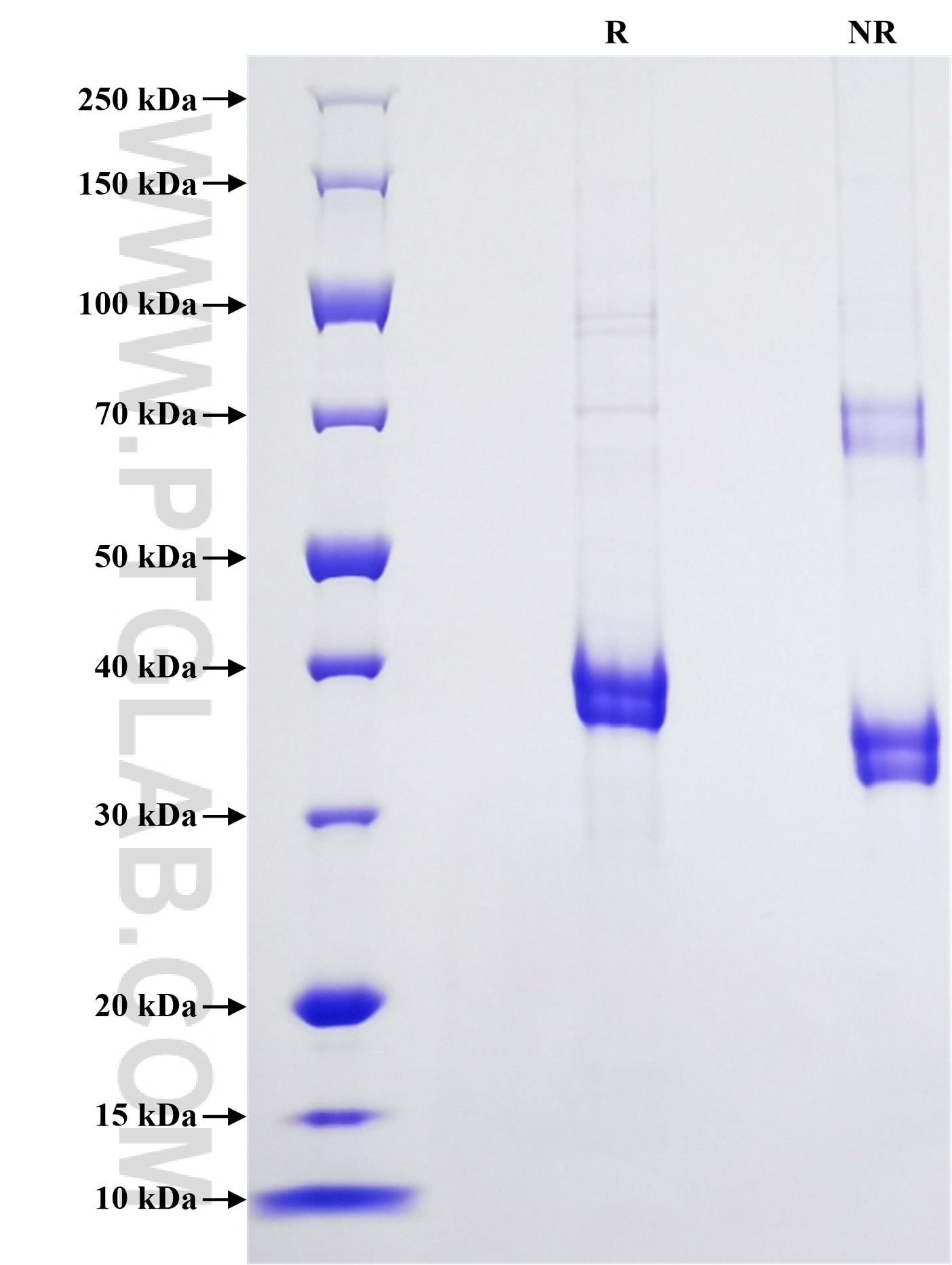
>90 %, SDS-PAGE
Tag
rFc Tag
Activity
not tested
Cat no : Eg3237
Validation Data Gallery
Product Information
| Purity | >90 %, SDS-PAGE |
| Endotoxin | <0.1 EU/μg protein, LAL method |
| Activity |
Not tested |
| Expression | HEK293-derived Rat CCL20 protein Ser27-Met96 (Accession# P97884) with a rabbit IgG Fc tag at the C-terminus. |
| GeneID | 29538 |
| Accession | P97884 |
| PredictedSize | 34.2 kDa |
| SDS-PAGE | 35-40 kDa, reducing (R) conditions |
| Formulation | Lyophilized from 0.22 μm filtered solution in PBS, pH 7.4. Normally 5% trehalose and 5% mannitol are added as protectants before lyophilization. |
| Reconstitution | Briefly centrifuge the tube before opening. Reconstitute at 0.1-0.5 mg/mL in sterile water. |
| Storage Conditions |
It is recommended that the protein be aliquoted for optimal storage. Avoid repeated freeze-thaw cycles.
|
| Shipping | The product is shipped at ambient temperature. Upon receipt, store it immediately at the recommended temperature. |
Background
CCL20, also known as MIP-3 alpha, is a chemokine expressed mainly in the lymphatic tissue, lung and liver produced by cells related with inflammation and autoimmune response such as endothelial cells, neutrophils, natural killer (NK), Th17 cells and B cells among others. CCL20 contributes to inflammatory cell recruitment. CCL20 selectively signals through its receptor CCR6. The ligand-receptor pair CCL20/CCR6 is responsible for the chemoattraction of immature dendritic cells, effector/memory T cells and B cells, and also serves a role in the skin and mucosal surfaces under homeostatic and inflammatory conditions, as well as in pathological processes, such as those associated with cancer and rheumatoid arthritis.
References:
 1. Schutyser, Evemie et al. Cytokine & growth factor reviews vol. 14,5 (2003): 409-26.
2. Hromas, R et al. Blood vol. 89,9 (1997): 3315-22.
3. Shimizu, Y et al. Hepatology (Baltimore, Md.) vol. 34,2 (2001): 311-9.
4. Lee, Adrian Y S et al. Frontiers in immunology vol. 4 (2013): 194.