
Recombinant Mouse MMP8 protein (rFc Tag)
Species
Mouse
Purity
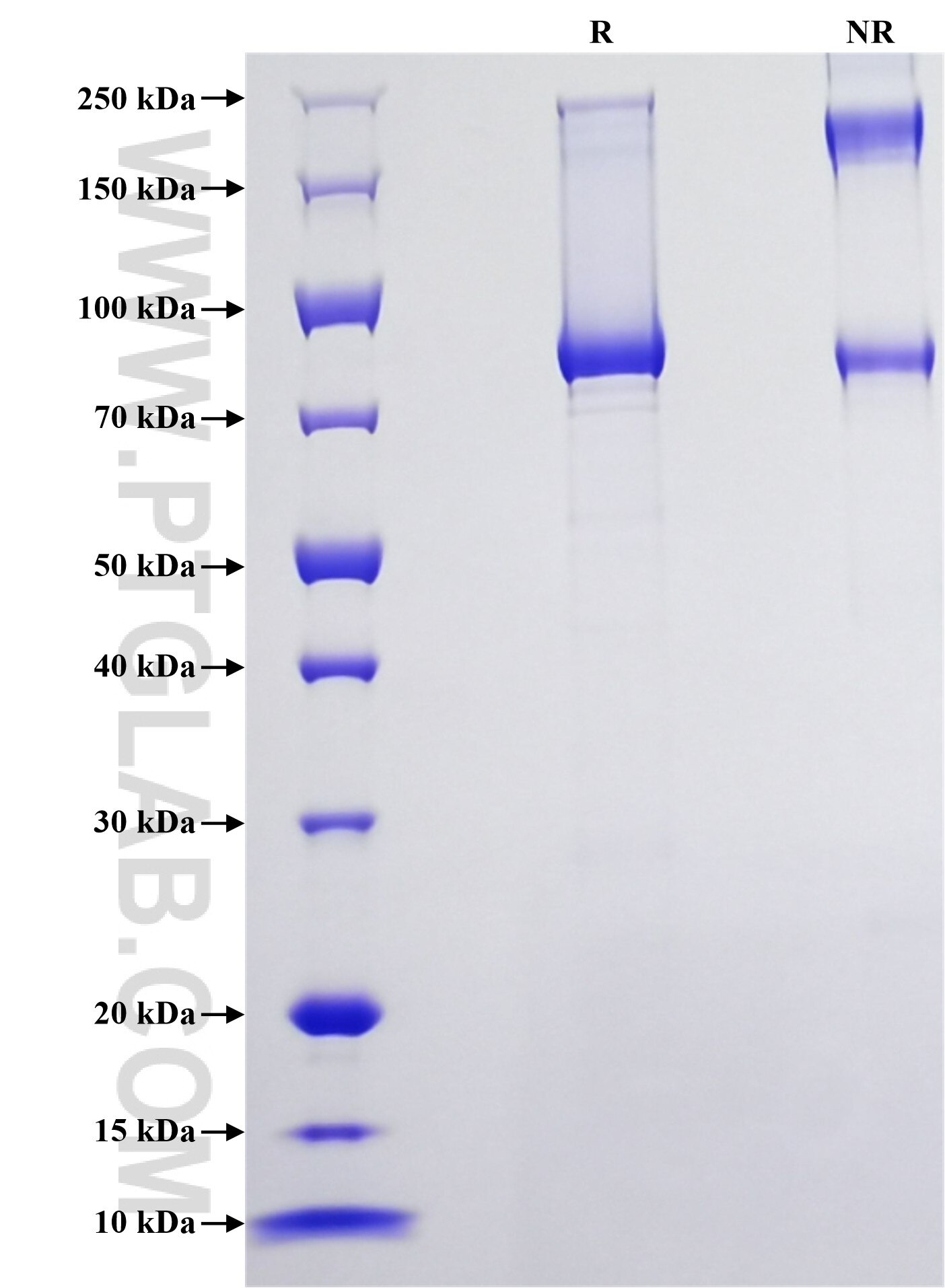
>90 %, SDS-PAGE
Tag
rFc Tag
Activity
not tested
Cat no : Eg3161
Validation Data Gallery
Product Information
| Purity | >90 %, SDS-PAGE |
| Endotoxin | <0.1 EU/μg protein, LAL method |
| Activity |
Not tested |
| Expression | HEK293-derived Mouse MMP8 protein Phe21-Ser465 (Accession# O70138) with a rabbit IgG Fc tag at the C-terminus. |
| GeneID | 17394 |
| Accession | O70138 |
| PredictedSize | 76.4 kDa |
| SDS-PAGE | 80-90 kDa, reducing (R) conditions |
| Formulation | Lyophilized from 0.22 μm filtered solution in PBS, pH 7.4. Normally 5% trehalose and 5% mannitol are added as protectants before lyophilization. |
| Reconstitution | Briefly centrifuge the tube before opening. Reconstitute at 0.1-0.5 mg/mL in sterile water. |
| Storage Conditions |
It is recommended that the protein be aliquoted for optimal storage. Avoid repeated freeze-thaw cycles.
|
| Shipping | The product is shipped at ambient temperature. Upon receipt, store it immediately at the recommended temperature. |
Background
Matrix Metalloproteinase 8 (MMP8), also known as neutrophil collagenase, is a member of the MMP family that plays a critical role in extracellular matrix remodeling. It is primarily expressed in neutrophils and is involved in collagen degradation and tissue repair. MMP8 has been shown to facilitate neutrophil migration and is essential for immune responses. In cancer, MMP8 can have both pro-tumorigenic and anti-tumorigenic roles. For instance, mutations in MMP8 have been identified in melanoma, with wild-type MMP8 inhibiting tumor progression. Additionally, MMP8-deficient mice exhibit increased susceptibility to certain infections and delayed wound healing. These findings highlight the multifaceted role of MMP8 in inflammation, cancer, and tissue repair.
References:
1. Lin, Michelle et al. The American journal of pathology vol. 173,1 (2008): 144-53.
2. Palavalli, Lavanya H et al. Nature genetics vol. 41,5 (2009): 518-20.
3. Daly, Meghan C et al. FASEB journal : official publication of the Federation of American Societies for Experimental Biology vol. 30,10 (2016): 3453-3460.