
Recombinant Human Gastrin protein (rFc Tag)
Species
Human
Purity
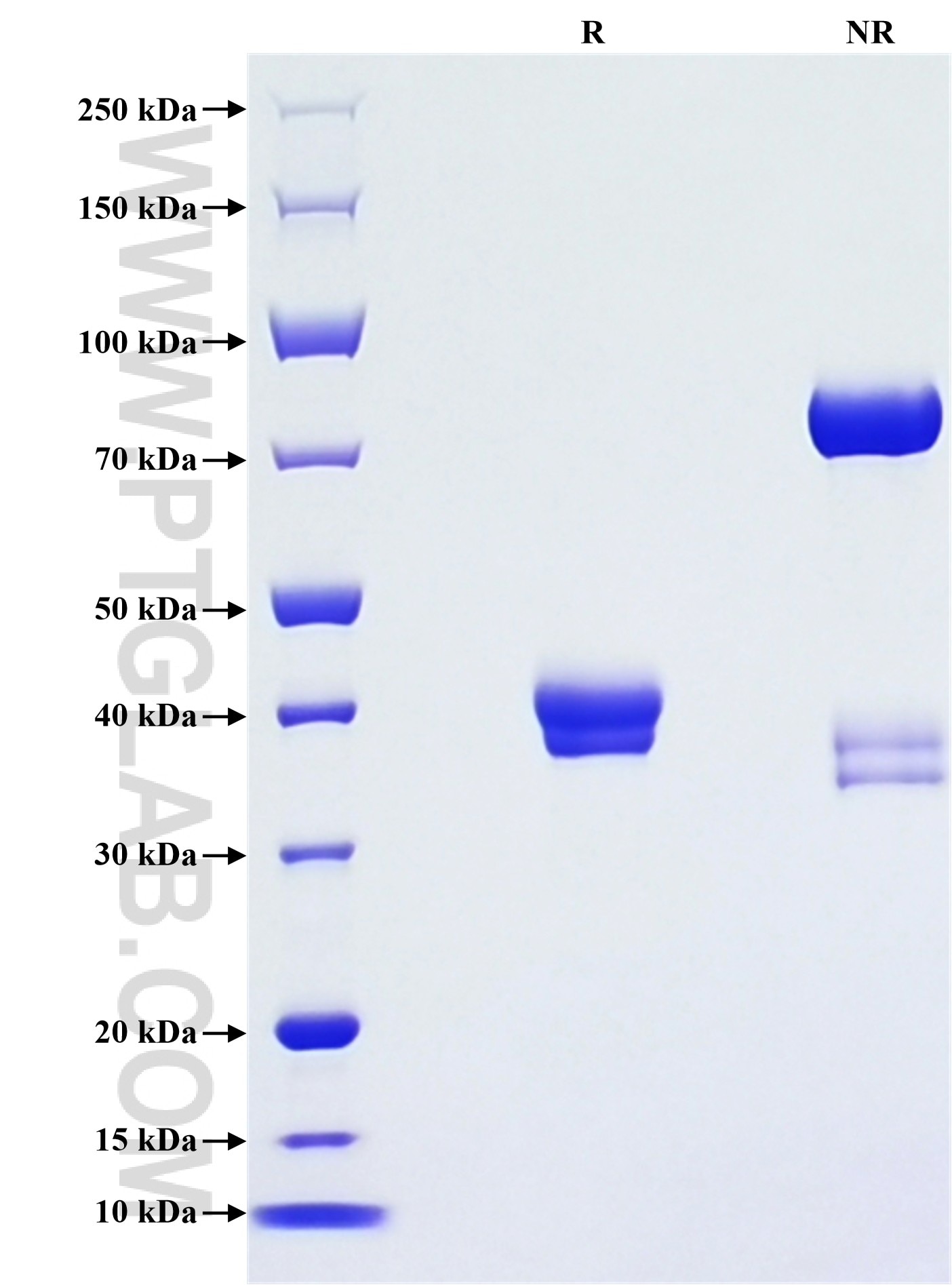
>90 %, SDS-PAGE
Tag
rFc Tag
Activity
not tested
Cat no : Eg3089
Validation Data Gallery
Product Information
| Purity | >90 %, SDS-PAGE |
| Endotoxin | <0.1 EU/μg protein, LAL method |
| Activity |
Not tested |
| Expression | HEK293-derived Human Gastrin protein Ser22-Asn101 (Accession# P01350) with a rabbit IgG Fc tag at the C-terminus. |
| GeneID | 2520 |
| Accession | P01350 |
| PredictedSize | 34.7 kDa |
| SDS-PAGE | 37-43 kDa, reducing (R) conditions |
| Formulation | Lyophilized from 0.22 μm filtered solution in PBS, pH 7.4. Normally 5% trehalose and 5% mannitol are added as protectants before lyophilization. |
| Reconstitution | Briefly centrifuge the tube before opening. Reconstitute at 0.1-0.5 mg/mL in sterile water. |
| Storage Conditions |
It is recommended that the protein be aliquoted for optimal storage. Avoid repeated freeze-thaw cycles.
|
| Shipping | The product is shipped at ambient temperature. Upon receipt, store it immediately at the recommended temperature. |
Background
Gastrin is a hormone produced primarily by G-cells in the stomach, where it functions to stimulate acid secretion by gastric parietal cells. Gastrin is a promiscuous hormone. Thus, the gastrin gene is expressed in common cancers such as bronchogenic, colorectal, ovarian and pancreatic carcinomas.
References:
1. Debas, H T. Clinical and investigative medicine. Medecine clinique et experimentale vol. 10,3 (1987): 222-5.
2. Varro, Andrea, and Joy E S Ardill. Annals of clinical biochemistry vol. 40,Pt 5 (2003): 472-80.
3. Dockray, Graham et al. Pflugers Archiv : European journal of physiology vol. 449,4 (2005): 344-55.