
Recombinant Mouse Ccl11 protein (rFc Tag)
Species
Mouse
Purity
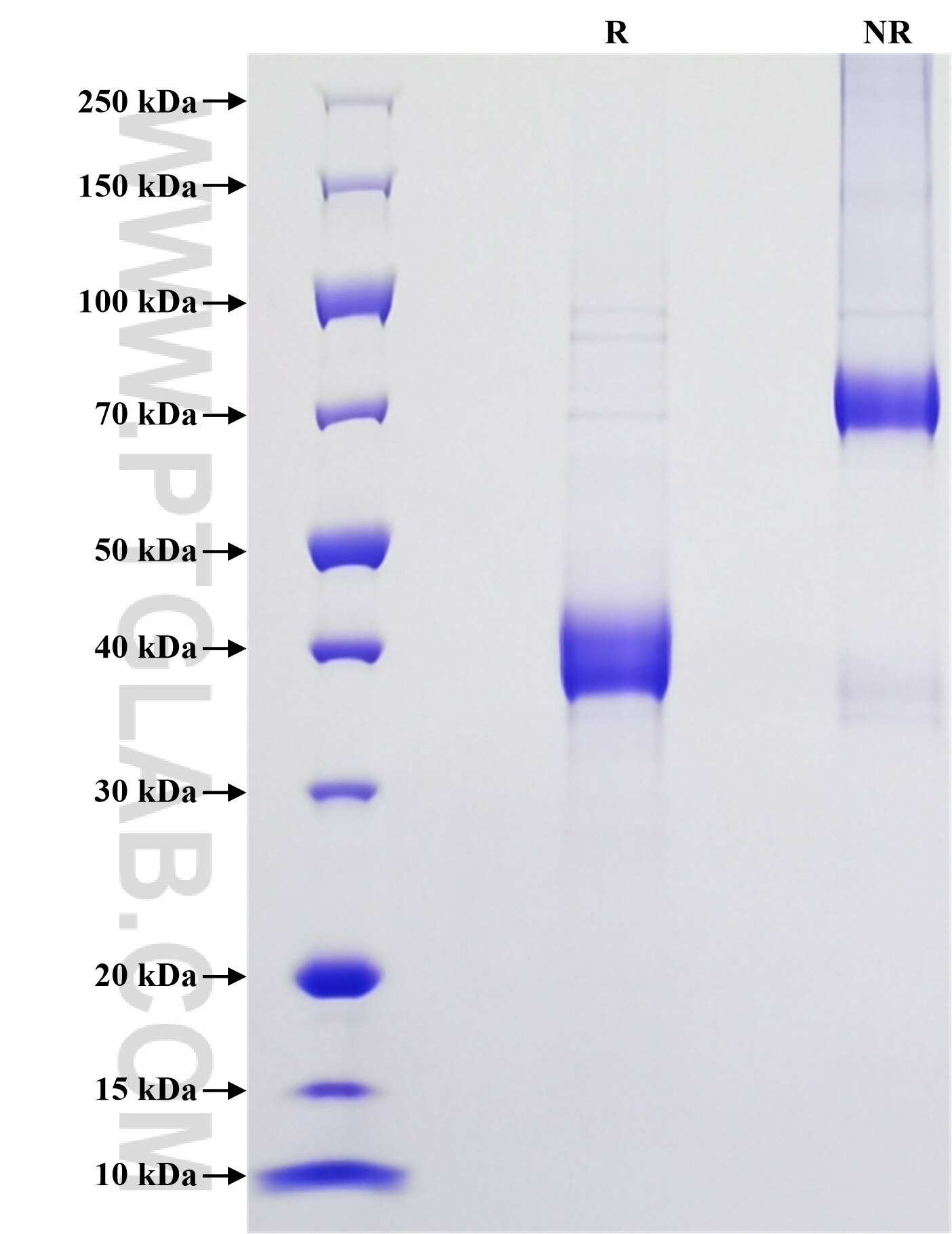
>90 %, SDS-PAGE
Tag
rFc Tag
Activity
not tested
Cat no : Eg2400
Validation Data Gallery
Product Information
| Purity | >90 %, SDS-PAGE |
| Endotoxin | <0.1 EU/μg protein, LAL method |
| Activity |
Not tested |
| Expression | HEK293-derived Mouse Ccl11 protein His24-Pro97 (Accession# P48298) with a rabbit IgG Fc tag at the N-terminus. |
| GeneID | 20292 |
| Accession | P48298 |
| PredictedSize | 35.2 kDa |
| SDS-PAGE | 37-45 kDa, reducing (R) conditions |
| Formulation | Lyophilized from 0.22 μm filtered solution in PBS, pH 7.4. Normally 5% trehalose and 5% mannitol are added as protectants before lyophilization. |
| Reconstitution | Briefly centrifuge the tube before opening. Reconstitute at 0.1-0.5 mg/mL in sterile water. |
| Storage Conditions |
It is recommended that the protein be aliquoted for optimal storage. Avoid repeated freeze-thaw cycles.
|
| Shipping | The product is shipped at ambient temperature. Upon receipt, store it immediately at the recommended temperature. |
Background
CCL11 also named Eotaxin, was initially discovered as an eosinophil-specific chemoattractant. CCL11 plays a central role in both allergic and non-allergic inflammatory reactions by recruiting immune cells such as eosinophils,basophils and Th2 lymphocytes. CCL11 binds to the chemokine receptors CCR2, CCR3 and CCR5, with highest affinity to CCR3. High levels of CCL11 have been described in several chronic inflammatory diseases, such as allergic rhinitis, atopic dermatitis, asthma, gastrointestinal disease and rheumatoid arthritis.
References:
1. Garcia-Zepeda EA. et al. (2019) Nat Med. 2(4):449-56.
2. Ye J. et al. (2000) J Biol Chem.275(35):27250-7.
3. Kitaura M. et al. (1996) J Biol Chem. 271(13):7725-30.
4. Kokkonen H. et al. (2010) Arthritis Rheum. 62(2):383-91.
5. Clin Immunol.et al. (2014) Clin Immunol. 153(1):199-208.
6. Wu D. et al. (2019) J Asthma.51(8):847-54.