
Recombinant Human FGFR2(IIIc) protein (His Tag)
Species
Human
Purity
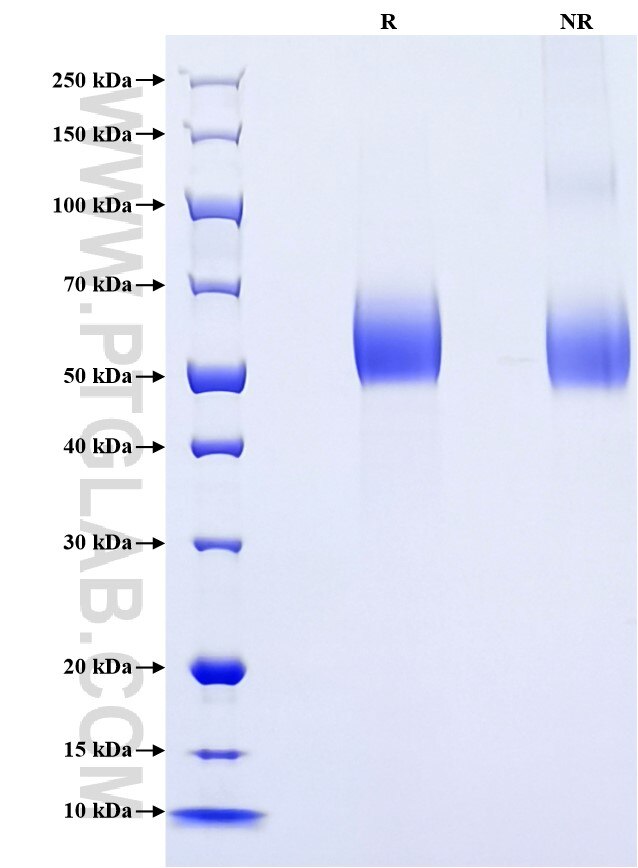
>90 %, SDS-PAGE
Tag
His Tag
Activity
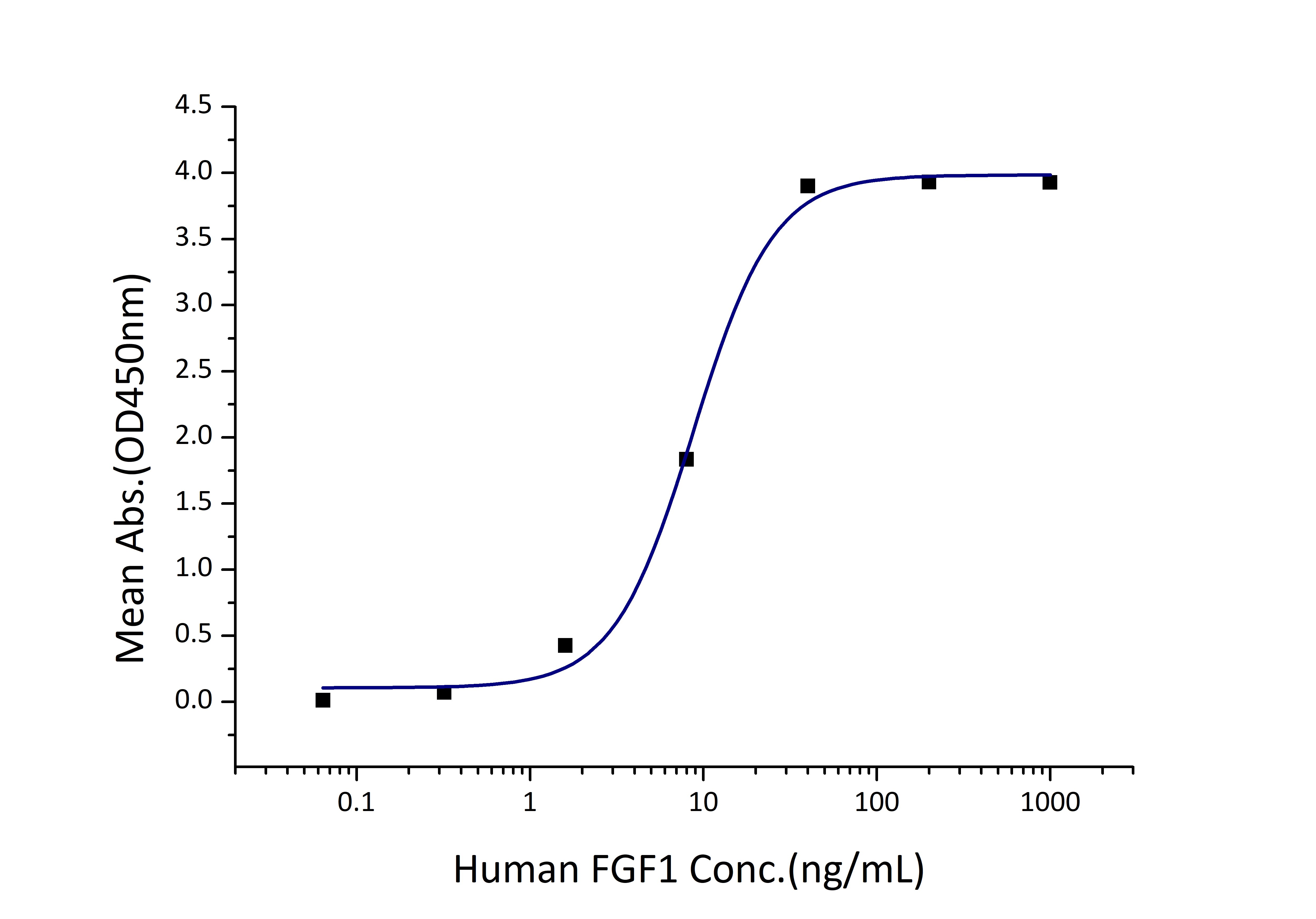
EC50: 4-17 ng/mL
Cat no : Eg1265
Validation Data Gallery
Product Information
| Purity | >90 %, SDS-PAGE |
| Endotoxin | <0.1 EU/μg protein, LAL method |
| Activity |
Immobilized Human FGFR2(IIIc) (His tag) at 2 μg/mL (100 μL/well) can bind Human FGF1 (rFc tag) with a linear range of 4-17 ng/mL. |
| Expression | HEK293-derived Human FGFR2(IIIc) protein Arg22-Glu377 (Accession# P21802-1) with a His tag at the C-terminus. |
| GeneID | 2263 |
| Accession | P21802-1 |
| PredictedSize | 40.6 kDa |
| SDS-PAGE | 50-70 kDa, reducing (R) conditions |
| Formulation | Lyophilized from 0.22 μm filtered solution in PBS, pH 7.4. Normally 5% trehalose and 5% mannitol are added as protectants before lyophilization. |
| Reconstitution | Briefly centrifuge the tube before opening. Reconstitute at 0.1-0.5 mg/mL in sterile water. |
| Storage Conditions |
It is recommended that the protein be aliquoted for optimal storage. Avoid repeated freeze-thaw cycles.
|
| Shipping | The product is shipped at ambient temperature. Upon receipt, store it immediately at the recommended temperature. |
Background
FGFR2 (Fibroblast growth factor receptor 2) is a tyrosine-protein kinase that acts as a cell-surface receptor for fibroblast growth factors and plays an essential role in the regulation of cell proliferation, differentiation, migration, and apoptosis. Ligand binding leads to the activation of several signaling pathways, such as RAS, MAPK1/ERK2, MAPK3/ERK1, and the MAP Kinase signaling pathway, as well as the AKT1 signaling pathway. Mutations in the gene of FGFR2 are associated with Crouzon syndrome, Pfeiffer syndrome, Craniosynostosis, Apert syndrome, Jackson-Weiss syndrome, Beare-Stevenson cutis gyrata syndrome, Saethre-Chotzen syndrome, and syndromic craniosynostosis.
References:
1. Babina, Irina S, and Nicholas C Turner. Nature reviews. Cancer vol. 17,5 (2017): 318-332.
2. Liao, Rachel G et al. Cancer research vol. 73,16 (2013): 5195-205.
3. Gavine, Paul R et al. Cancer research vol. 72,8 (2012): 2045-56.