
Recombinant Human CTLA-4/CD152 protein (His Tag)
Species
Human
Purity
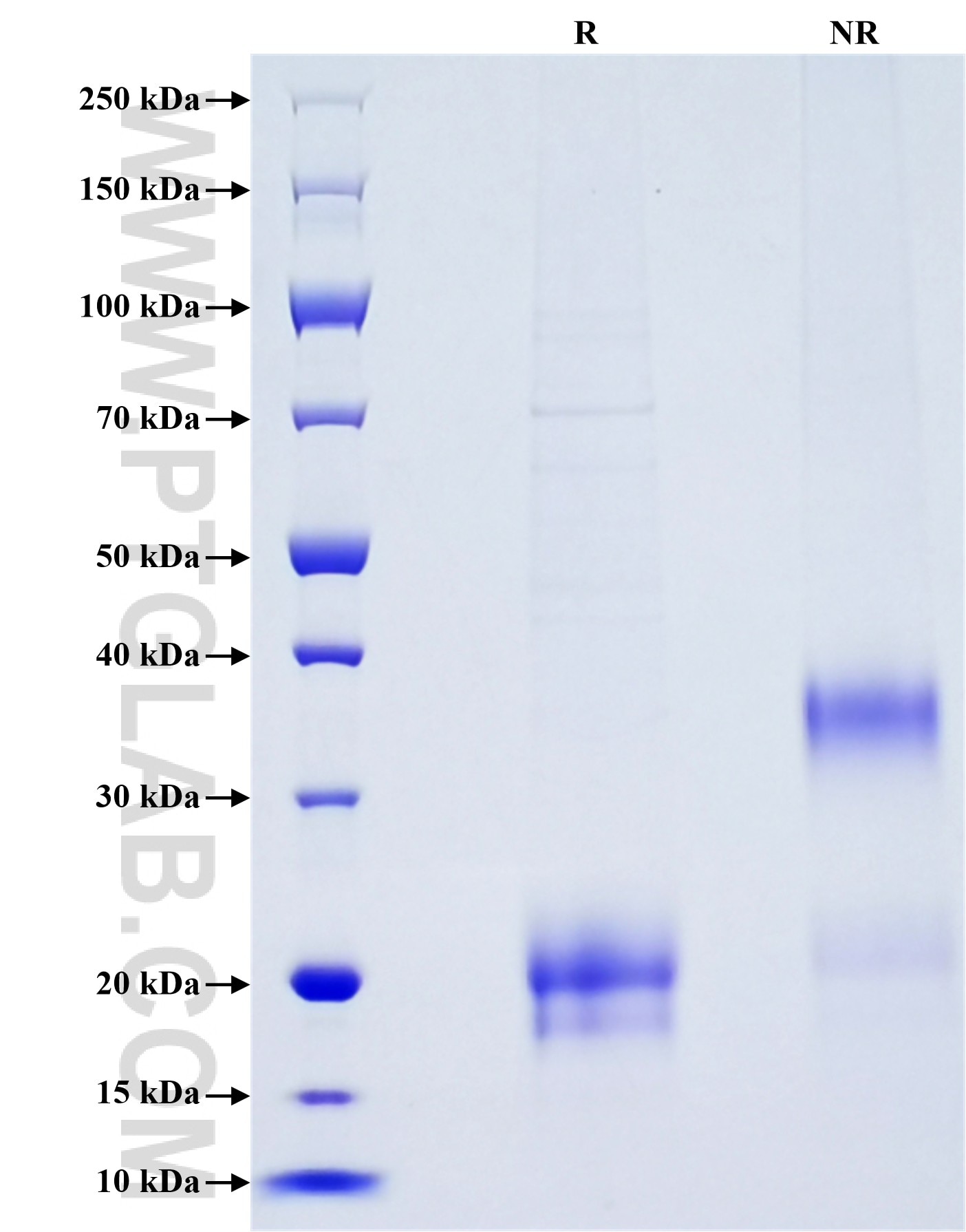
>90 %, SDS-PAGE
Tag
His Tag
Activity
not tested
Cat no : Eg0972
Validation Data Gallery
Product Information
| Purity | >90 %, SDS-PAGE |
| Endotoxin | <0.1 EU/μg protein, LAL method |
| Activity |
Not tested |
| Expression | HEK293-derived Human CTLA-4/CD152 protein Lys36-Asp161 (Accession# P16410) with a His tag at the C-terminus. |
| GeneID | 1493 |
| Accession | P16410 |
| PredictedSize | 14.6 kDa |
| SDS-PAGE | 18-22 kDa, reducing (R) conditions |
| Formulation | Lyophilized from 0.22 μm filtered solution in PBS, pH 7.4. Normally 5% trehalose and 5% mannitol are added as protectants before lyophilization. |
| Reconstitution | Briefly centrifuge the tube before opening. Reconstitute at 0.1-0.5 mg/mL in sterile water. |
| Storage Conditions |
It is recommended that the protein be aliquoted for optimal storage. Avoid repeated freeze-thaw cycles.
|
| Shipping | The product is shipped at ambient temperature. Upon receipt, store it immediately at the recommended temperature. |
Background
CTLA-4, also known as CD152, belonging to the immunoglobulin superfamily, is primarily found on activated T cells and regulatory T cells (Tregs). CTLA-4 is closely related to the T-cell costimulatory CD28, and both molecules bind to B7-1 and B7-2 on antigen-presenting cells. CTLA-4 acts as a negative regulatory molecule of T-cell responses. Besides the full-length transmembrane form, CTLA-4 also exists in a truncated soluble form (sCTLA-4).
References:
1. Brunet JF, et al. (1987) Nature. 328(6127):267-70.
2. Harper K, et al. (1991) J Immunol. 147(3):1037-44.
3. McCoy KD, et al. (1999) Immunol Cell Biol. 77(1):1-10.
4. Oaks MK, et al. (2000) Cell Immunol. 201(2):144-53.