
Recombinant Human SOST protein (His Tag)
Species
Human
Purity
>90 %, SDS-PAGE
Tag
His Tag
Activity
not tested
Cat no : Eg0407
Validation Data Gallery
Product Information
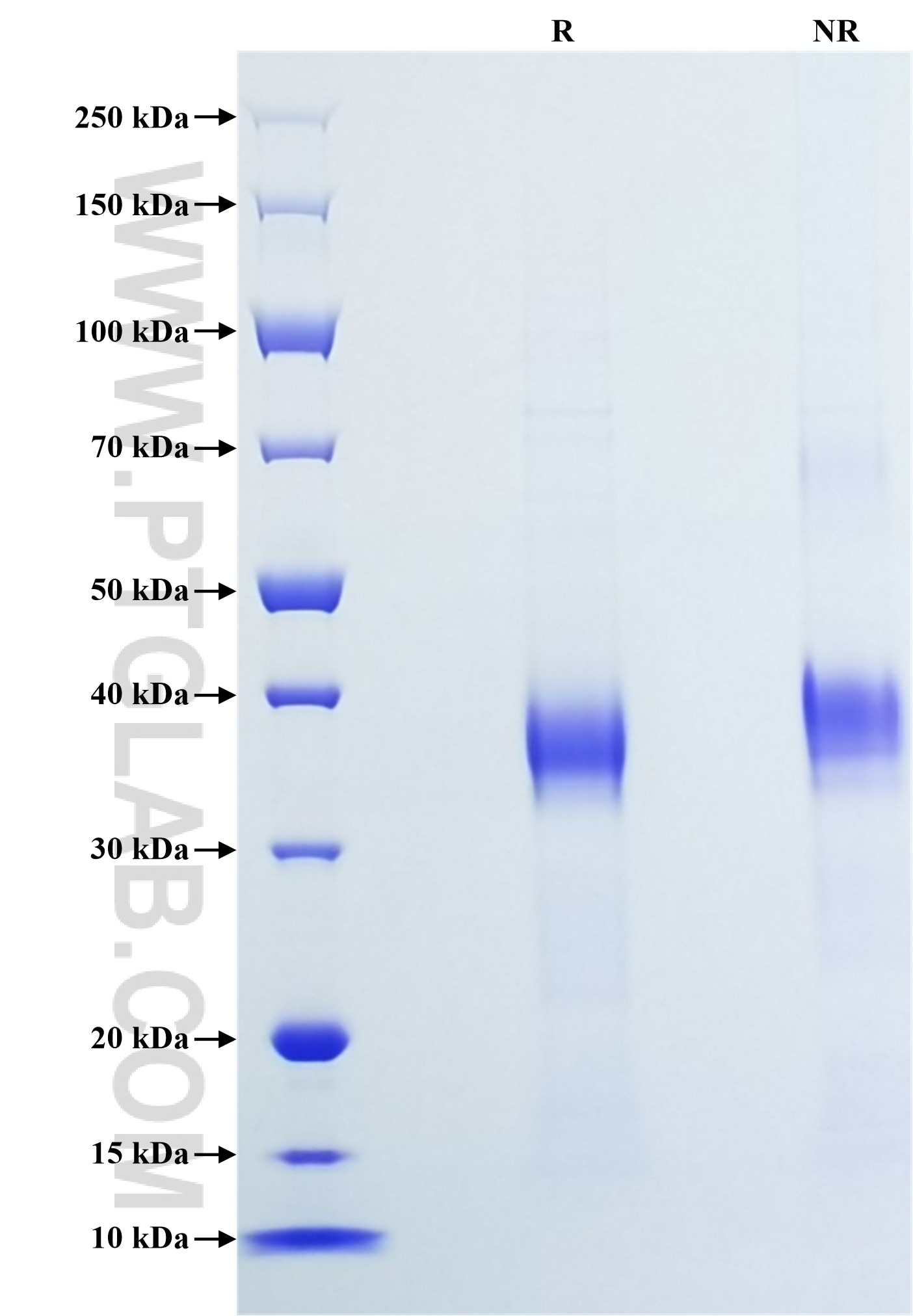
| Purity | >90 %, SDS-PAGE |
| Endotoxin | <0.1 EU/μg protein, LAL method |
| Activity |
Not tested |
| Expression | HEK293-derived Human SOST protein Gln24-Tyr213(Accession# Q9BQB4) with a His tag at the C-terminus. |
| GeneID | 50964 |
| Accession | Q9BQB4 |
| PredictedSize | 25.9 kDa |
| SDS-PAGE | 35-40 kDa, reducing (R) conditions |
| Formulation | Lyophilized from 0.22 μm filtered solution in PBS, pH 7.4. Normally 5% trehalose and 5% mannitol are added as protectants before lyophilization. |
| Reconstitution | Briefly centrifuge the tube before opening. Reconstitute at 0.1-0.5 mg/mL in sterile water. |
| Storage Conditions |
It is recommended that the protein be aliquoted for optimal storage. Avoid repeated freeze-thaw cycles.
|
| Shipping | The product is shipped at ambient temperature. Upon receipt, store it immediately at the recommended temperature. |
Background
Sclerostin (Sost) is a potent negative regulator of bone mass, where it normally inhibits Wnt signaling through interactions with low‐density lipoprotein receptor‐related protein (LRP) 5/6 co‐receptors. Expression of the gene product sclerostin in bone is restricted to osteocytes. In the absence of Sost protein, patients develop two types of hyperostosis, sclerosteosis and van Buchem disease. Sclerosteosis and Van Buchem disease are two closely related bone disorders characterized by progressive bone thickening due to increased bone formation. Sclerosteosis is associated with mutations in the SOST gene and Van Buchem disease with a 52 kb deletion downstream of the SOST gene that probably affects transcription of the gene.
References:
1. van Bezooijen, et al. (2005) Biochemistry.16(3):319-327.

2. Chang Jiun C, et al. (2018) Biochemistry.33(6):1105-1113.

3. Sun Lisha, et al. (2022) Biochemistry.21(1):228.