
Validation Data Gallery
Tested Applications
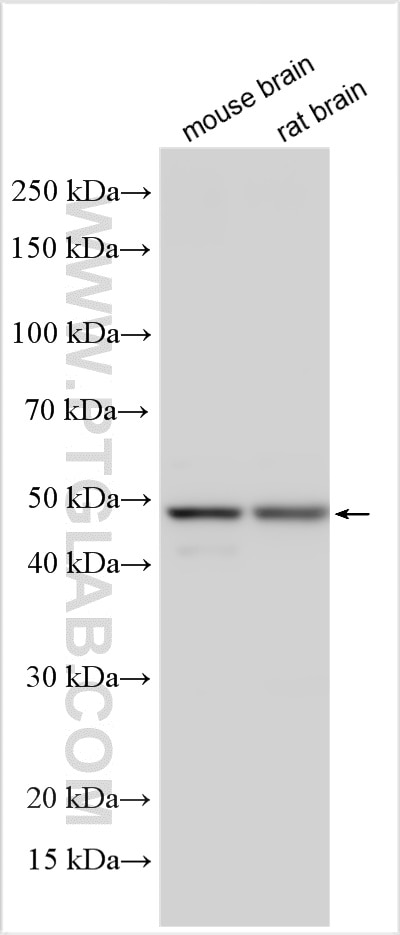
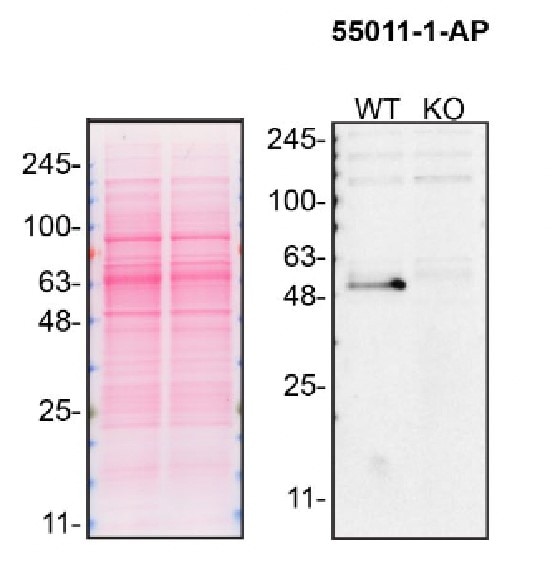
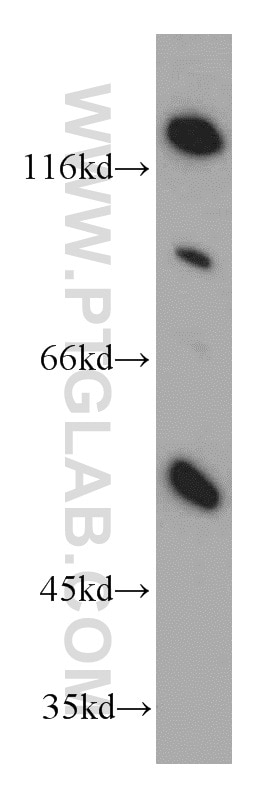
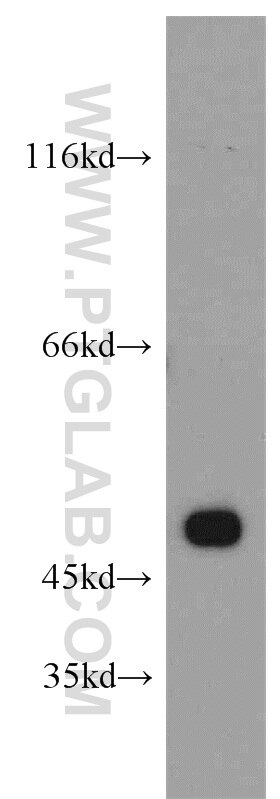
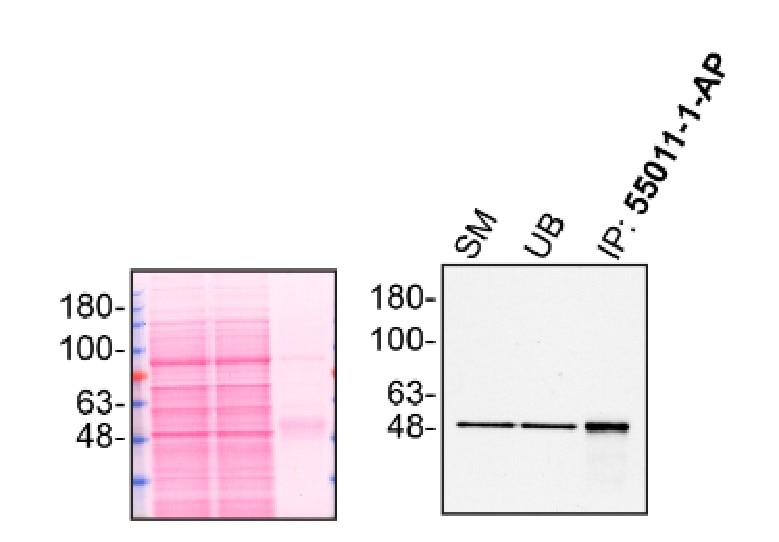
| Positive WB detected in | mouse brain tissue, HAP1 cells, rat brain tissue |
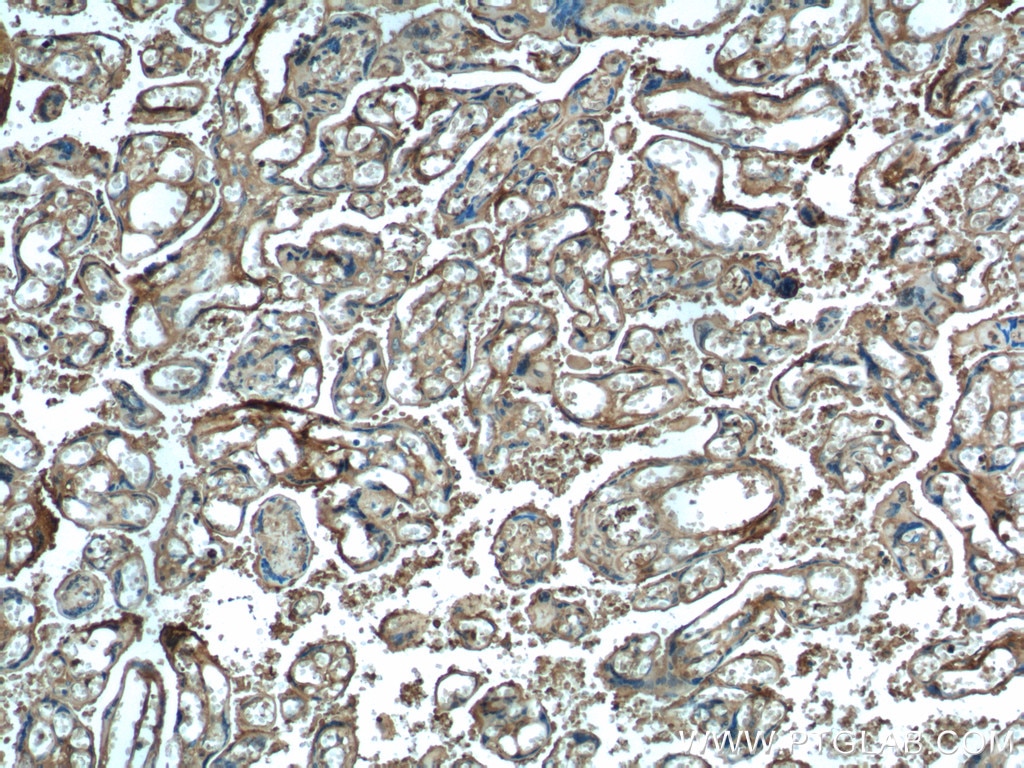
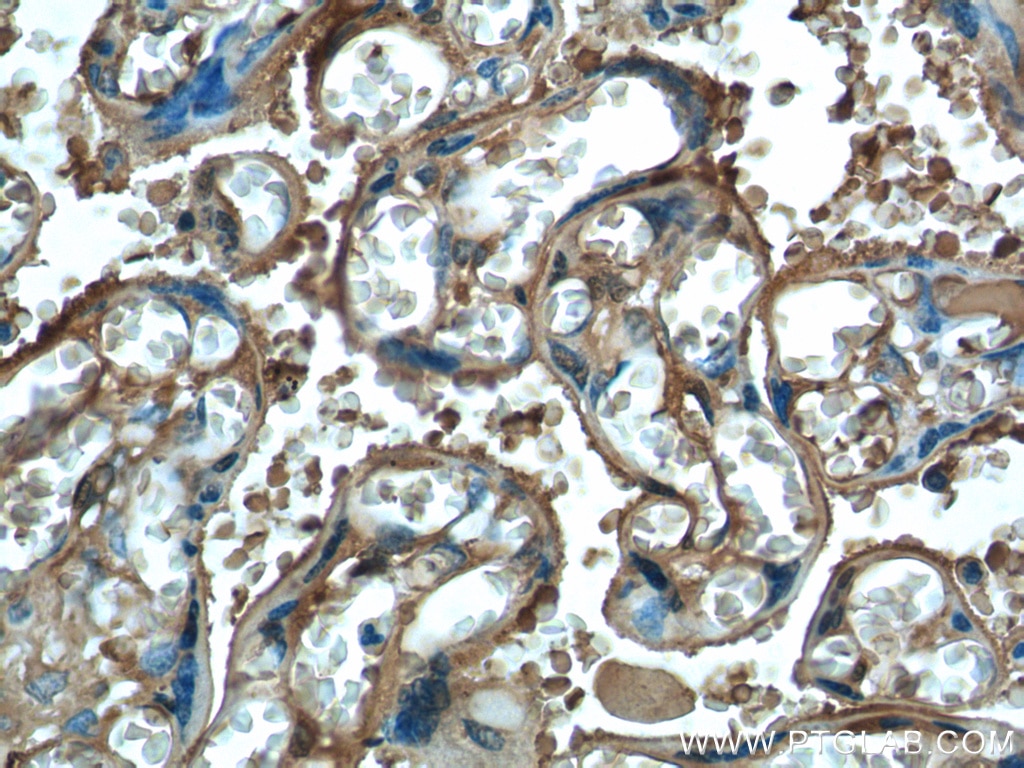
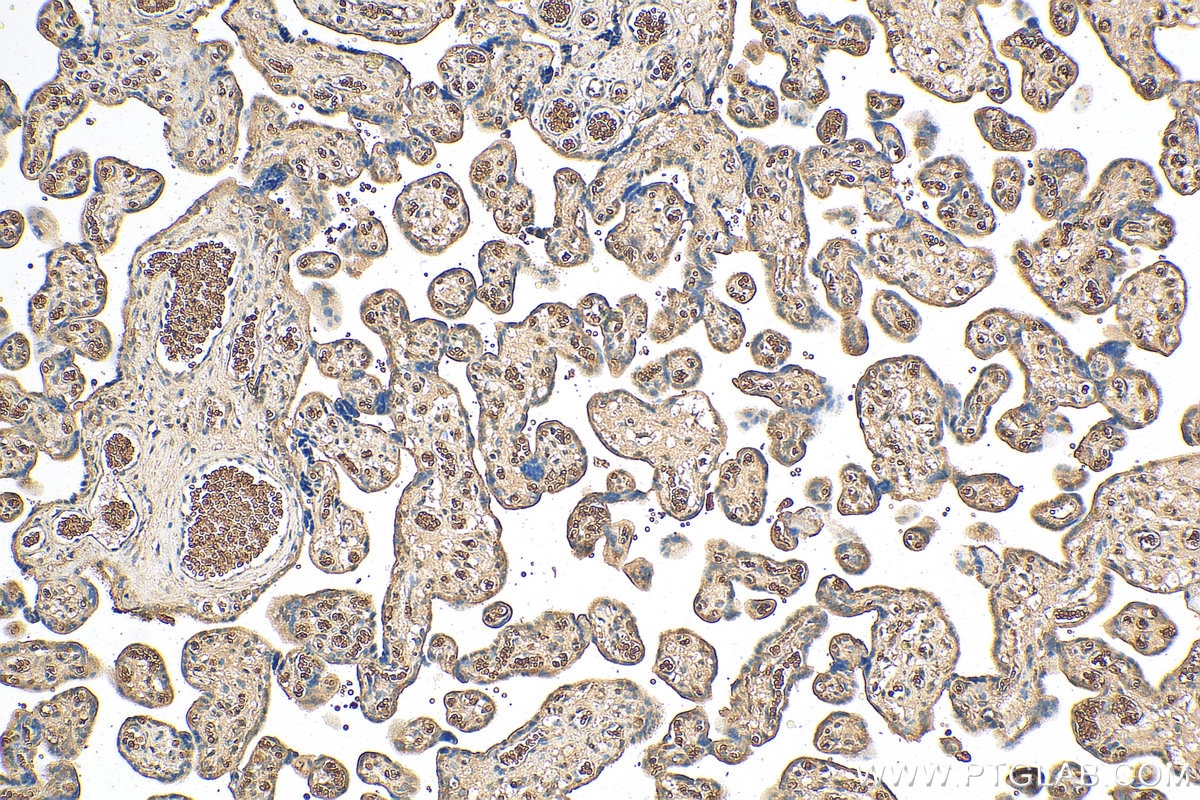
| Positive IHC detected in | human placenta tissue Note: suggested antigen retrieval with TE buffer pH 9.0; (*) Alternatively, antigen retrieval may be performed with citrate buffer pH 6.0 |
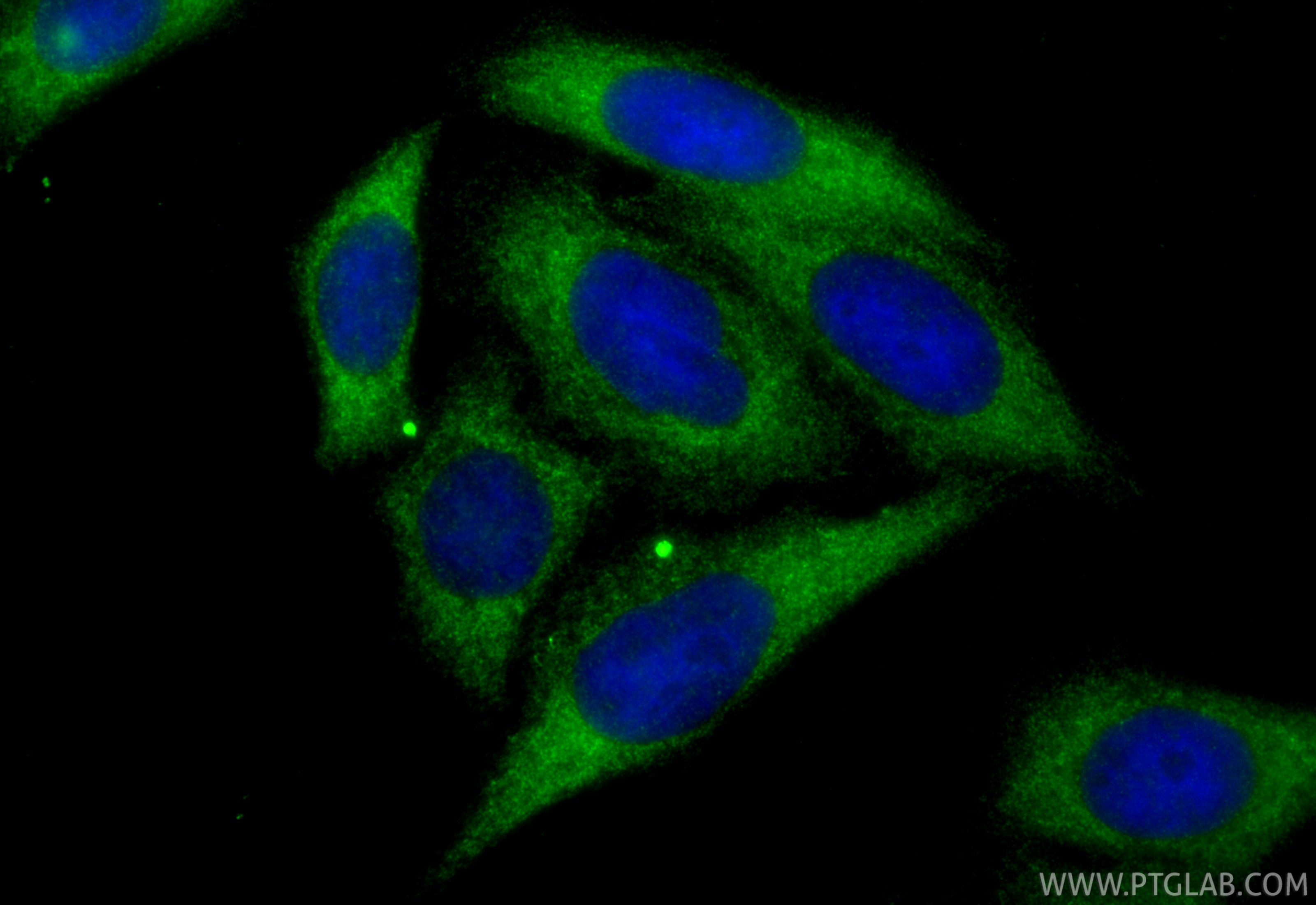
| Positive IF/ICC detected in | HepG2 cells |
Recommended dilution
| Application | Dilution |
|---|---|
| Western Blot (WB) | WB : 1:500-1:3000 |
| Immunohistochemistry (IHC) | IHC : 1:50-1:500 |
| Immunofluorescence (IF)/ICC | IF/ICC : 1:200-1:800 |
| It is recommended that this reagent should be titrated in each testing system to obtain optimal results. | |
| Sample-dependent, Check data in validation data gallery. | |
Published Applications
| KD/KO | See 1 publications below |
| WB | See 13 publications below |
| IHC | See 10 publications below |
| IF | See 5 publications below |
Product Information
55011-1-AP targets HTRA1 in WB, IHC, IF/ICC, ELISA applications and shows reactivity with human, mouse, rat samples.
| Tested Reactivity | human, mouse, rat |
| Cited Reactivity | human, mouse, rat, zebrafish |
| Host / Isotype | Rabbit / IgG |
| Class | Polyclonal |
| Type | Antibody |
| Immunogen |
Peptide 相同性解析による交差性が予測される生物種 |
| Full Name | HtrA serine peptidase 1 |
| Calculated molecular weight | 51 kDa |
| Observed molecular weight | 48-50 kDa |
| GenBank accession number | NM_002775 |
| Gene Symbol | HTRA1 |
| Gene ID (NCBI) | 5654 |
| RRID | AB_10859830 |
| Conjugate | Unconjugated |
| Form | |
| Form | Liquid |
| Purification Method | Antigen affinity purification |
| UNIPROT ID | Q92743 |
| Storage Buffer | PBS with 0.02% sodium azide and 50% glycerol{{ptg:BufferTemp}}7.3 |
| Storage Conditions | Store at -20°C. Stable for one year after shipment. Aliquoting is unnecessary for -20oC storage. |
Background Information
HTRA1, also named as HTRA, PRSS11 and L56, belongs to the peptidase S1B family. It is a protease that regulates the availability of nsulin-like growth factors (IGFs) by cleaving IGF-binding proteins. HTRA1 represses signaling by TGF-beta family members. Variations in the promoter region of HTRA1 are the cause of susceptibility to age-related macular degeneration type 7 (ARMD7). Defects in HTRA1 are the cause of cerebral autosomal recessive arteriopathy with subcortical infarcts and leukoencephalopathy (CARASIL). The 50 kDa HTRA1 was found at varying levels in the majority samples tested, whereas the 42 kDa form of HTRA1 was identified in degenerated intervertebral disc protein samples(PMID:22556410). The short truncated monomer 37 kDa and dimer 74 kDa are proved (PMID:25329061). The antibody is specific to HTRA1.
Protocols
| Product Specific Protocols | |
|---|---|
| IF protocol for HTRA1 antibody 55011-1-AP | Download protocol |
| IHC protocol for HTRA1 antibody 55011-1-AP | Download protocol |
| WB protocol for HTRA1 antibody 55011-1-AP | Download protocol |
| Standard Protocols | |
|---|---|
| Click here to view our Standard Protocols |
Publications
| Species | Application | Title |
|---|---|---|
Cell Comprehensive human proteome profiles across a 50-year lifespan reveal aging trajectories and signatures | ||
J Clin Invest N-acetyl-l-leucine lowers α-synuclein levels and improves synaptic function in Parkinson's disease models. | ||
Biomaterials Brief exposure to directionally-specific pulsed electromagnetic fields stimulates extracellular vesicle release and is antagonized by streptomycin: A potential regenerative medicine and food industry paradigm | ||
Cancer Biol Med VDAC1 protein derived from extracellular vesicles promotes paclitaxel resistance in gastric cancer through autophagy and mitophagy. | ||
Cell Commun Signal Inhibiting HIF-1 signaling alleviates HTRA1-induced RPE senescence in retinal degeneration | ||
Int J Mol Med Human papillomavirus E7 inhibits immune responses in keratinocytes by activating HTRA1‑mediated mitophagy. |