
Validation Data Gallery
Tested Applications
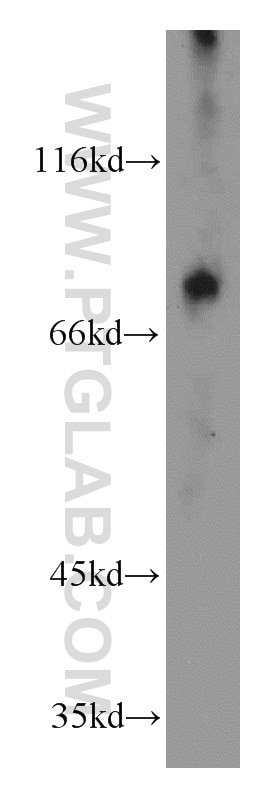
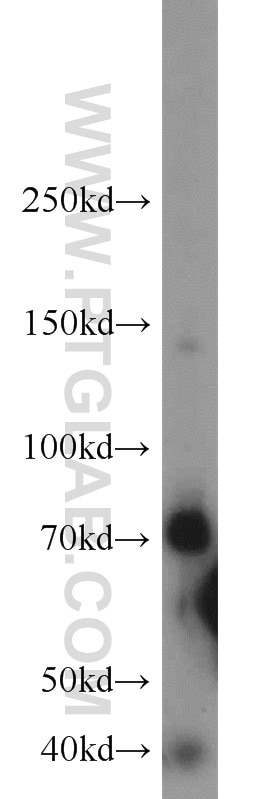
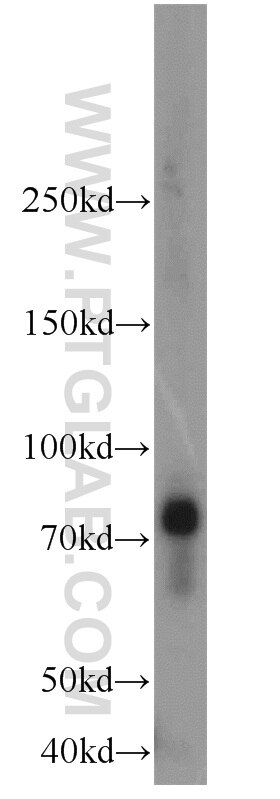
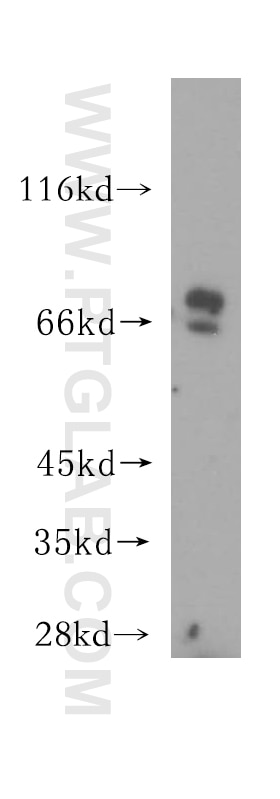
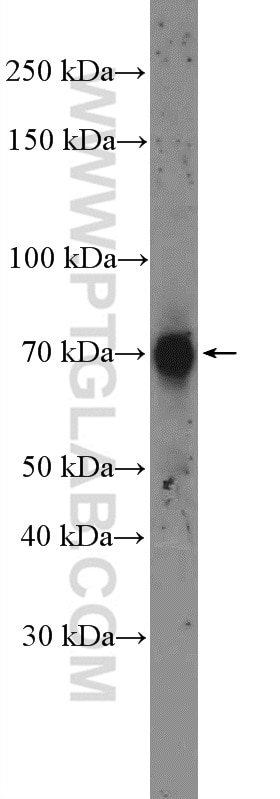
| Positive WB detected in | mouse small intestine tissue, mouse skeletal muscle tissue, human placenta tissue, mouse pancreas tissue, mouse testis tissue |
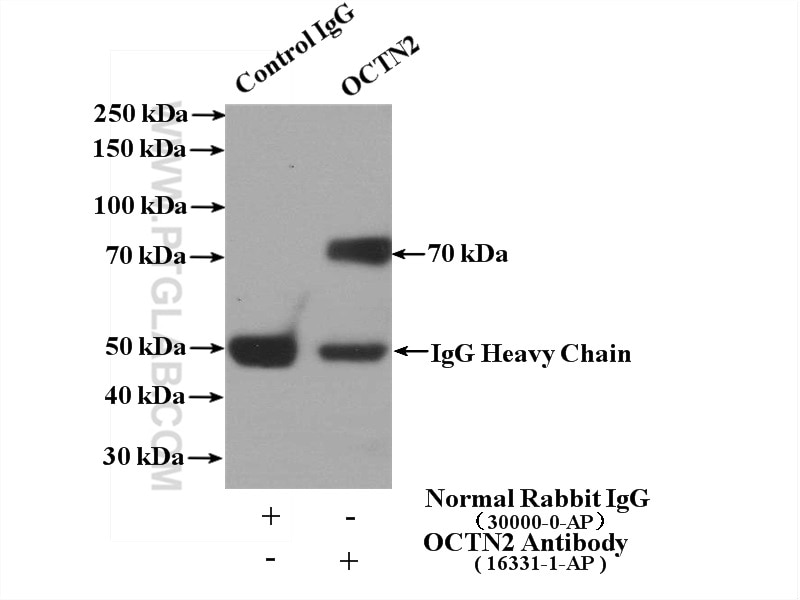
| Positive IP detected in | mouse skeletal muscle tissue |
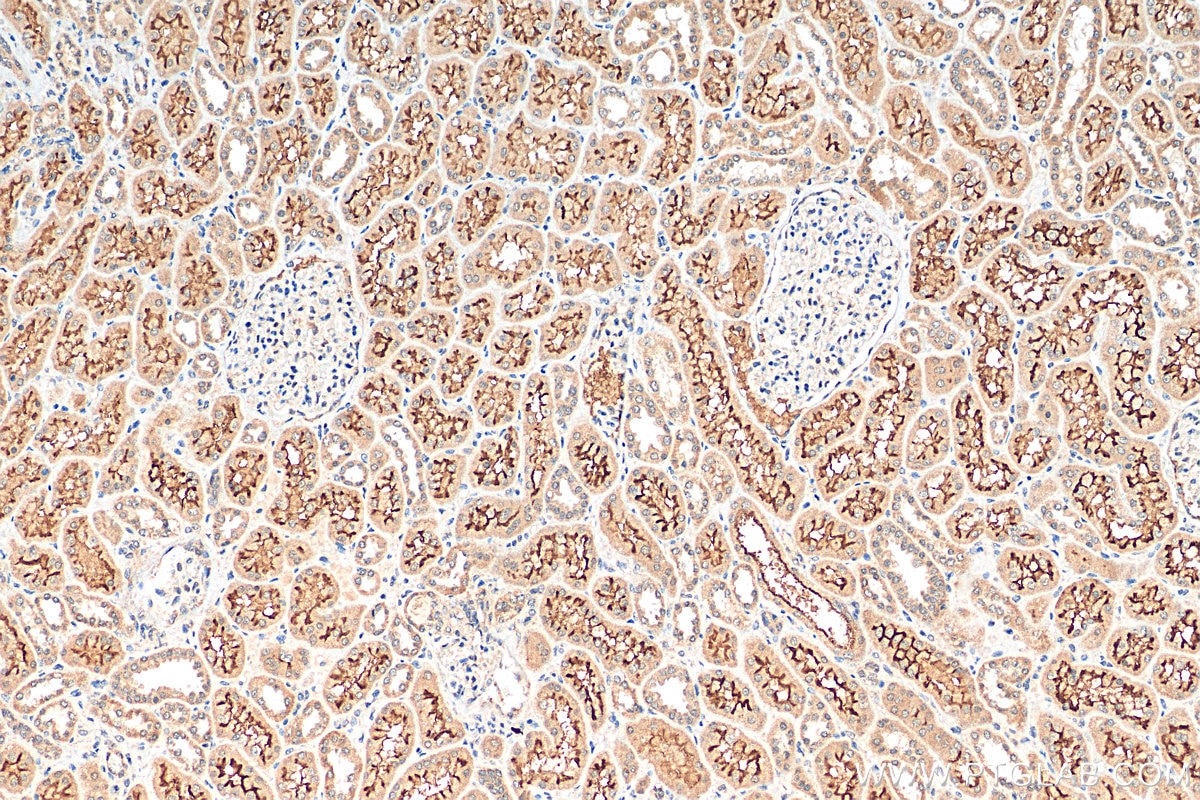
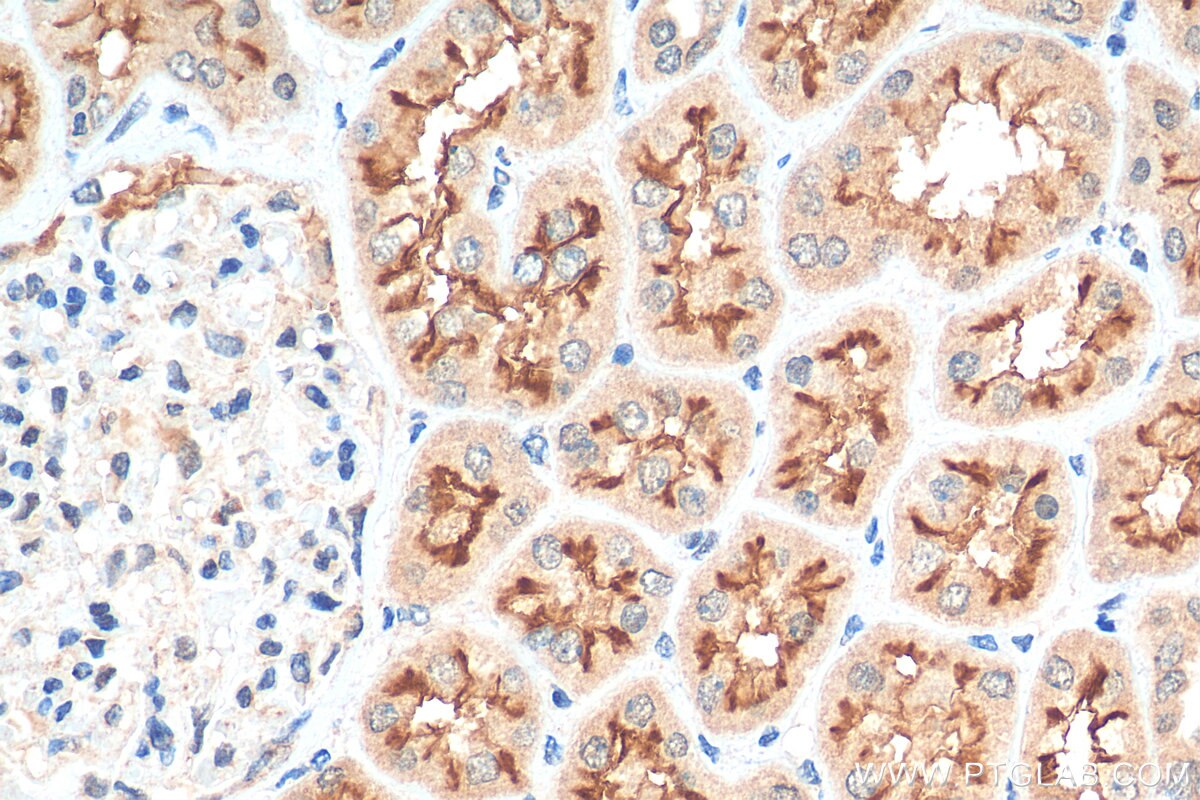
| Positive IHC detected in | human kidney tissue Note: suggested antigen retrieval with TE buffer pH 9.0; (*) Alternatively, antigen retrieval may be performed with citrate buffer pH 6.0 |
Recommended dilution
| Application | Dilution |
|---|---|
| Western Blot (WB) | WB : 1:500-1:1000 |
| Immunoprecipitation (IP) | IP : 0.5-4.0 ug for 1.0-3.0 mg of total protein lysate |
| Immunohistochemistry (IHC) | IHC : 1:50-1:500 |
| It is recommended that this reagent should be titrated in each testing system to obtain optimal results. | |
| Sample-dependent, Check data in validation data gallery. | |
Published Applications
| KD/KO | See 1 publications below |
| WB | See 14 publications below |
| IHC | See 2 publications below |
| IF | See 2 publications below |
Product Information
16331-1-AP targets OCTN2 in WB, IHC, IF, IP, ELISA applications and shows reactivity with human, mouse, rat samples.
| Tested Reactivity | human, mouse, rat |
| Cited Reactivity | human, mouse, rat |
| Host / Isotype | Rabbit / IgG |
| Class | Polyclonal |
| Type | Antibody |
| Immunogen |
CatNo: Ag9450 Product name: Recombinant human SLC22A5 protein Source: e coli.-derived, PGEX-4T Tag: GST Domain: 1-142 aa of BC012325 Sequence: MRDYDEVTAFLGEWGPFQRLIFFLLSASIIPNGFTGLSSVFLIATPEHRCRVPDAANLSSAWRNHTVPLRLRDGREVPHSCRRYRLATIANFSALGLEPGRDVDLGQLEQESCPDGWEFSQDVYLSTIVTEWNLVCEDDWKA 相同性解析による交差性が予測される生物種 |
| Full Name | solute carrier family 22 (organic cation/carnitine transporter), member 5 |
| Calculated molecular weight | 557 aa, 63 kDa |
| Observed molecular weight | 70-80 kDa |
| GenBank accession number | BC012325 |
| Gene Symbol | OCTN2 |
| Gene ID (NCBI) | 6584 |
| RRID | AB_2191406 |
| Conjugate | Unconjugated |
| Form | |
| Form | Liquid |
| Purification Method | Antigen affinity purification |
| UNIPROT ID | O76082 |
| Storage Buffer | PBS with 0.02% sodium azide and 50% glycerol{{ptg:BufferTemp}}7.3 |
| Storage Conditions | Store at -20°C. Stable for one year after shipment. Aliquoting is unnecessary for -20oC storage. |
Background Information
OCTN2 (Organic Cation/Carnitine Transporter 2), encoded by SLC22A5, is a ubiquitously expressed organic anion/cation transporter. OCTN2 plays a key role in absorption, tissue distribution and renal reabsorption of L-carnitine which is an essential cofactor in fat metabolism. Defects in the OCTN2 are responsible for primary carnitine deficiency. OCTN2 also transports some important respiratory medicines (such as tiotropium), and due to its expression in the lung, may influence the disposition and absorption of these medicines in the lung.
Protocols
| Product Specific Protocols | |
|---|---|
| IHC protocol for OCTN2 antibody 16331-1-AP | Download protocol |
| IP protocol for OCTN2 antibody 16331-1-AP | Download protocol |
| WB protocol for OCTN2 antibody 16331-1-AP | Download protocol |
| Standard Protocols | |
|---|---|
| Click here to view our Standard Protocols |
Publications
| Species | Application | Title |
|---|---|---|
J Hepatol Ketohexokinase-C regulates global protein acetylation to decrease carnitine palmitoyltransferase 1a-mediated fatty acid oxidation | ||
Cell Metab Global Analysis of Plasma Lipids Identifies Liver-Derived Acylcarnitines as a Fuel Source for Brown Fat Thermogenesis. | ||
Drug Resist Updat Dissection of immunotherapeutic predictive versus prognostic transcriptional programs identifies SLC22A5-centric carnitine metabolism-driven resistance to anti-PD-(L)1 treatment in non-small cell lung cancer. | ||
Adv Sci (Weinh) Conjugated Lithocholic Acid Activates Hepatic TGR5 to Promote Lipotoxicity and MASLD-MASH Transition by Disrupting Carnitine Biosynthesis | ||
Cell Rep Med Targeting long-chain acylcarnitine accumulation to protect cardiac mitochondrial homeostasis after complete revascularization. | ||
Food Res Int Aging-associated intestinal dysfunction impairs 5-heptadecylresorcinol absorption: Mechanistic insights into transporter-mediated uptake, barrier integrity and inflammatory regulation |