
Validation Data Gallery
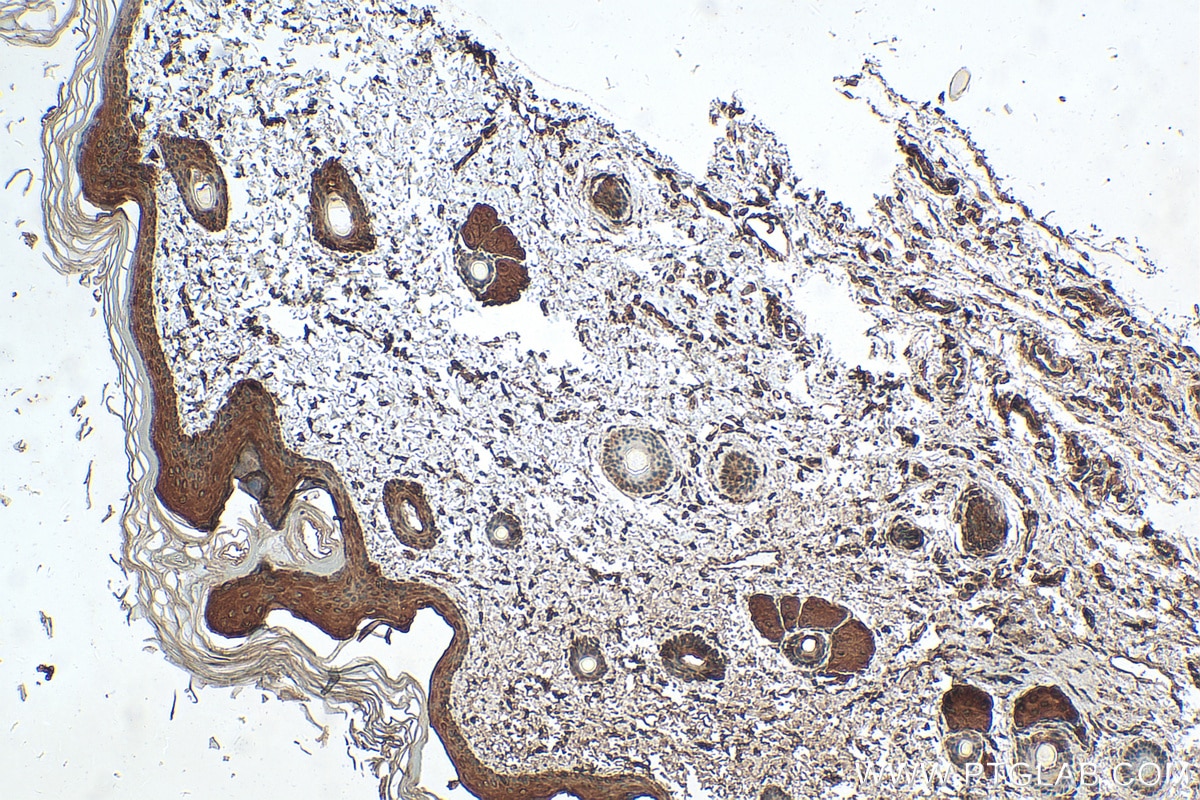
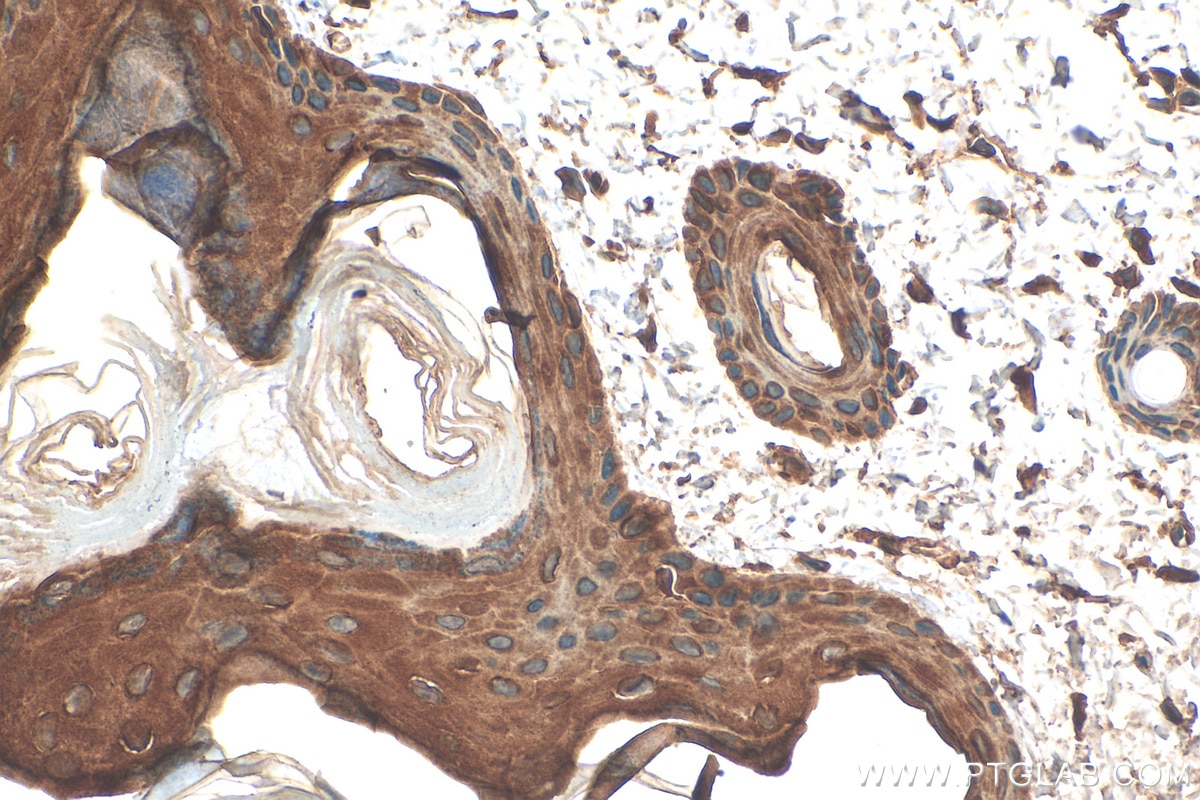
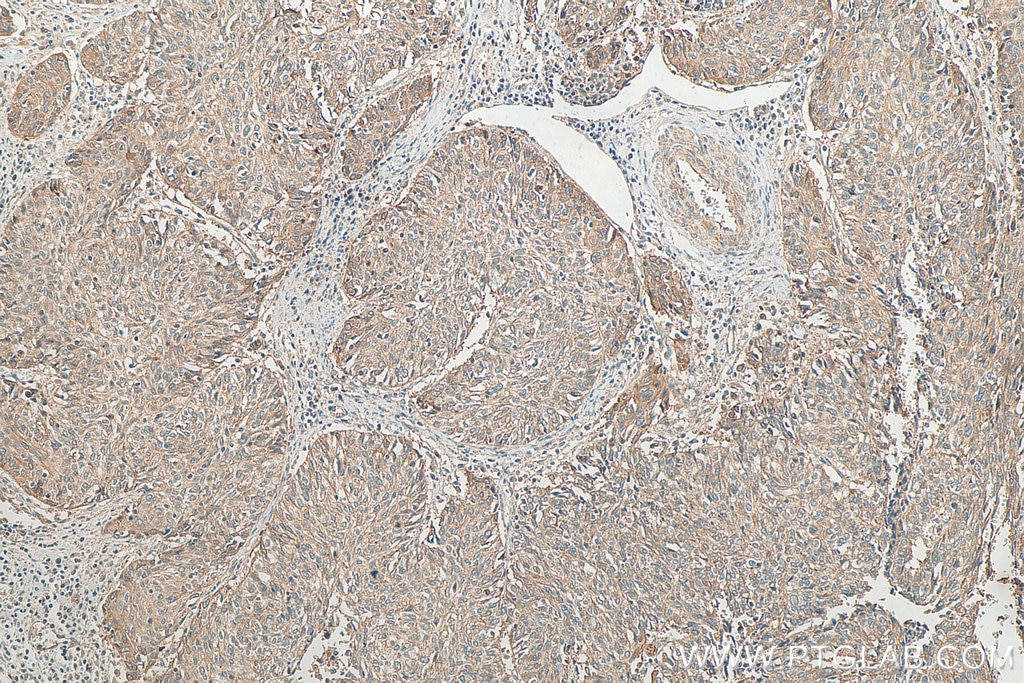
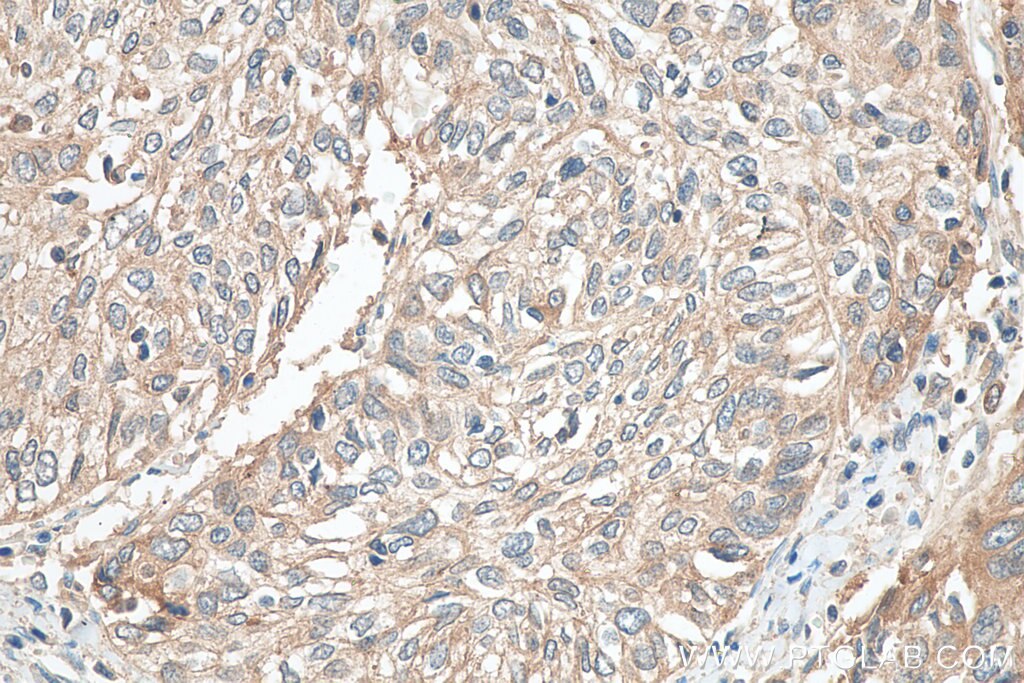
Tested Applications
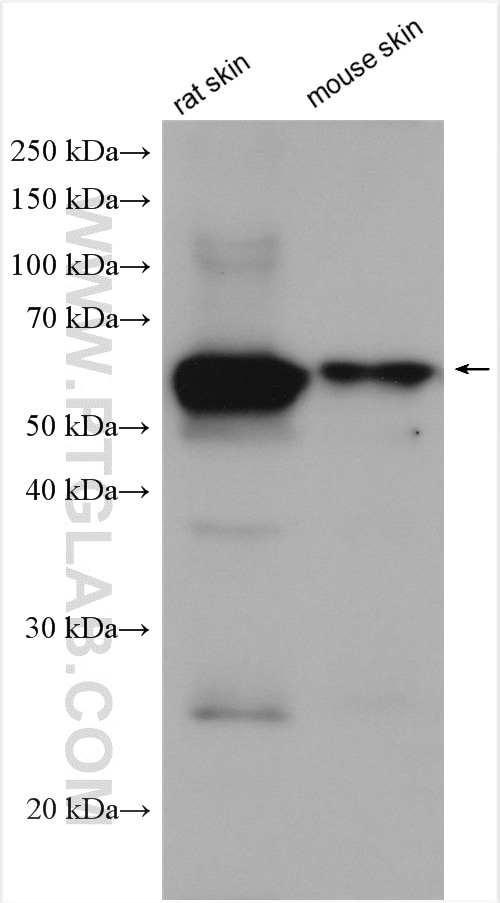
| Positive WB detected in | rat skin tissue, mouse skin tissue |
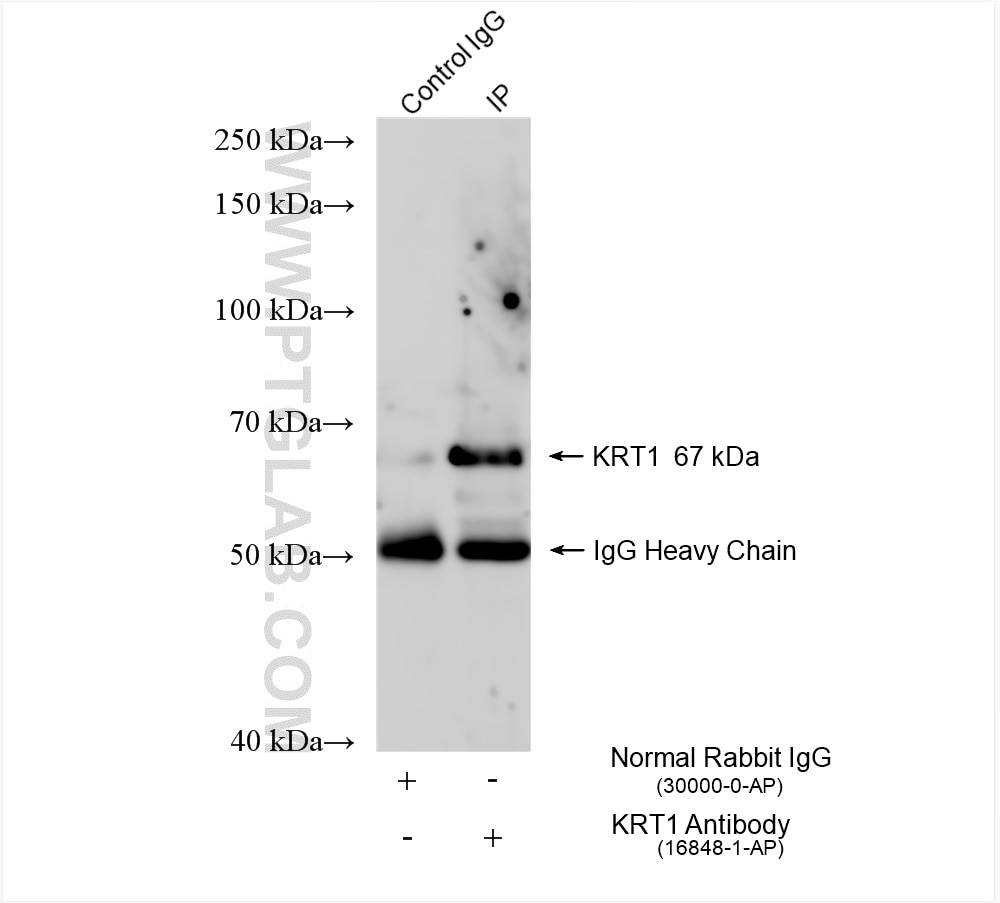
| Positive IP detected in | mouse skin tissue |
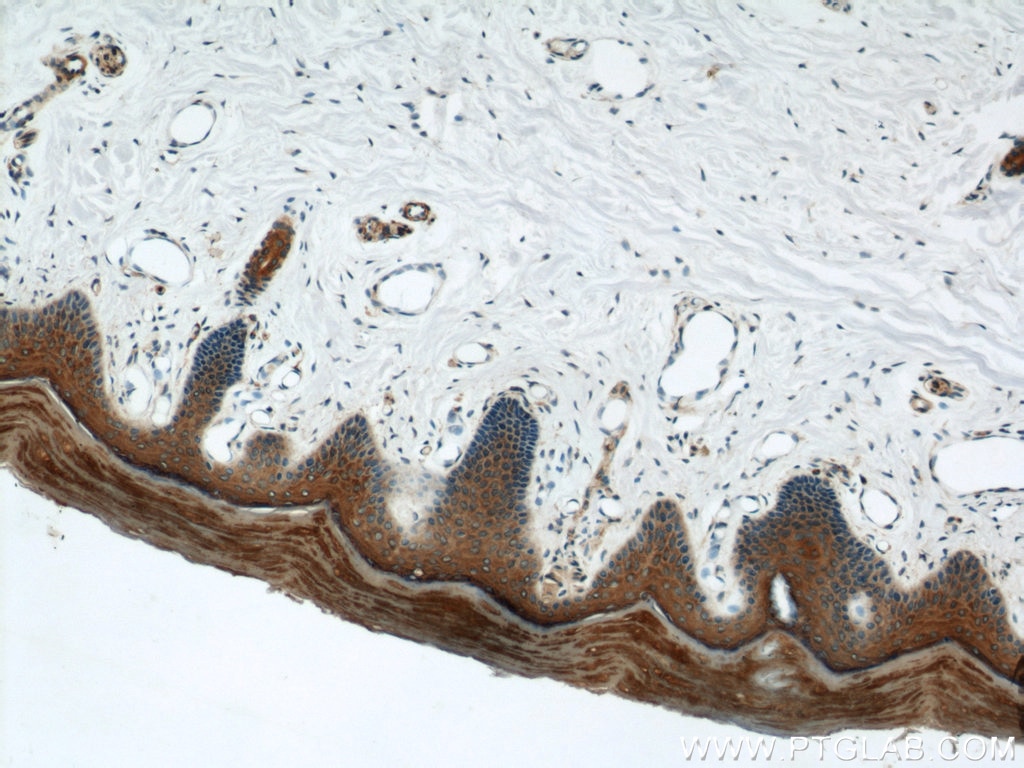
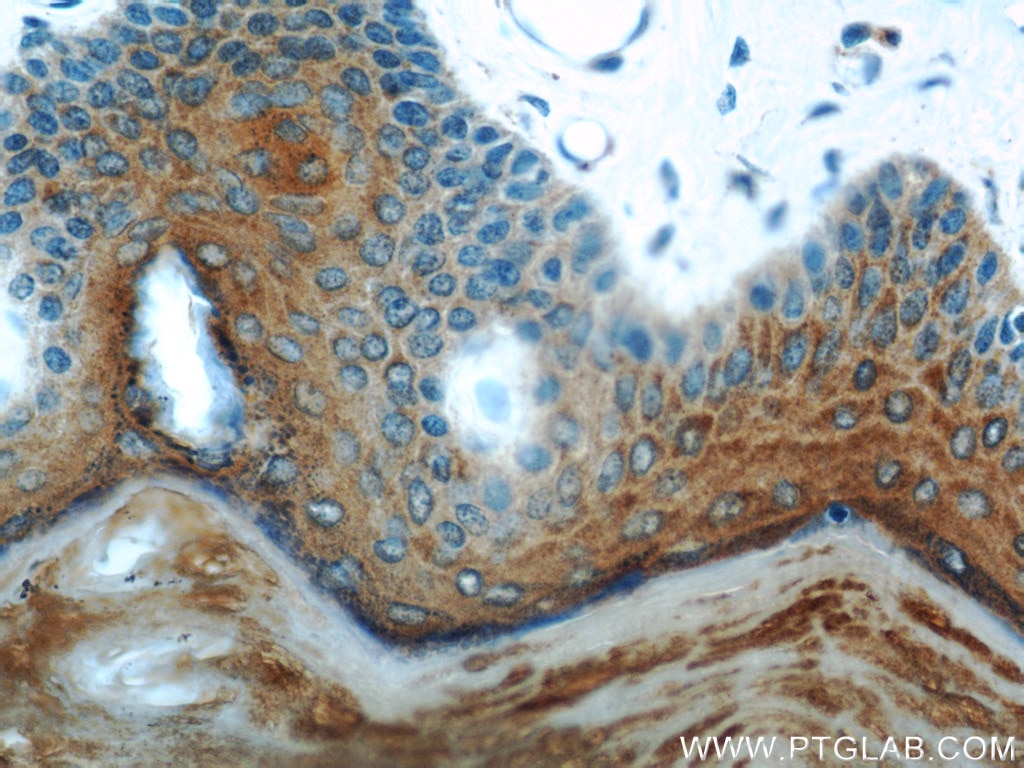
| Positive IHC detected in | rat skin tissue, human cervical cancer tissue, human skin tissue Note: suggested antigen retrieval with TE buffer pH 9.0; (*) Alternatively, antigen retrieval may be performed with citrate buffer pH 6.0 |
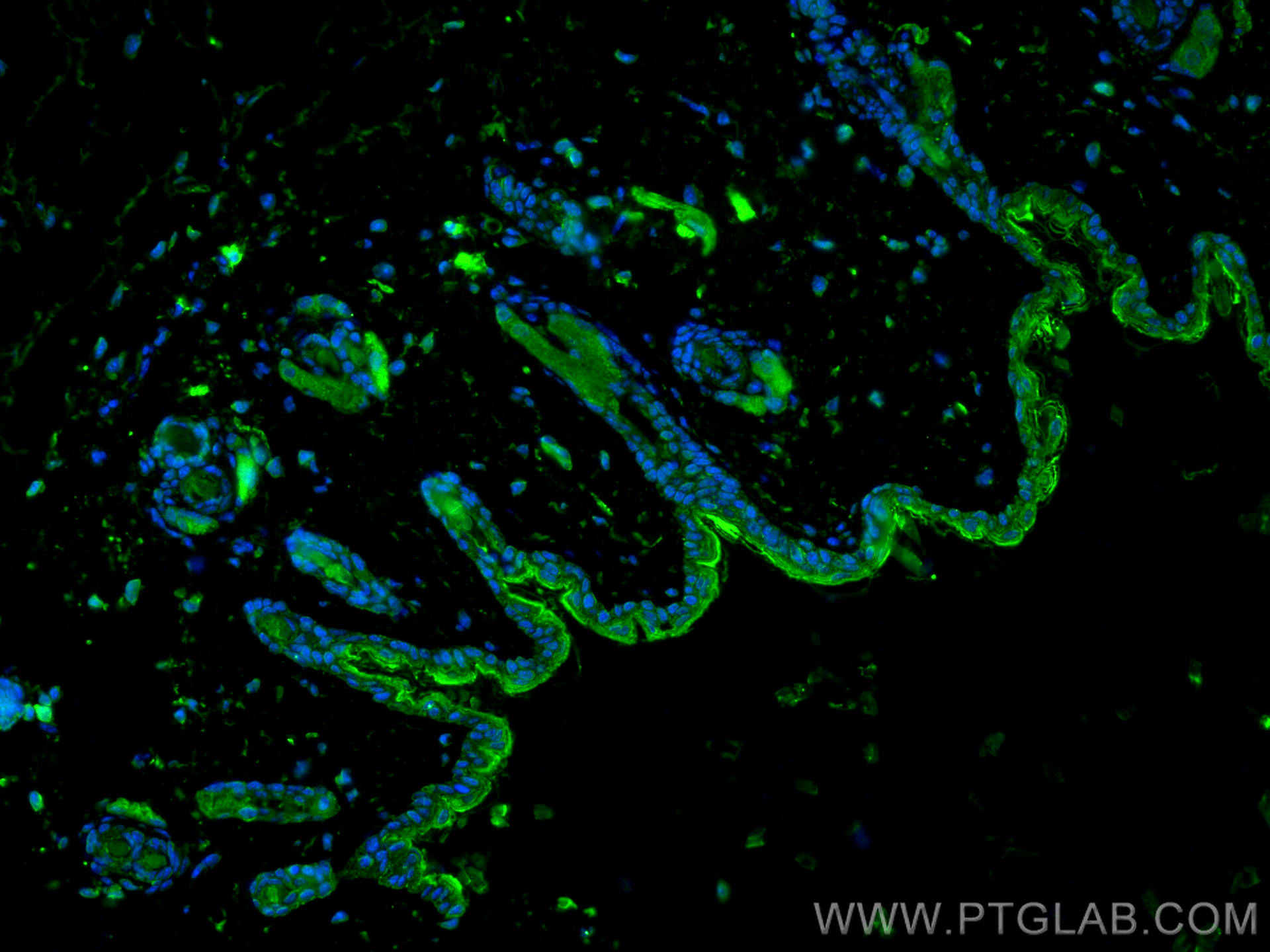
| Positive IF-P detected in | mouse skin tissue |
Recommended dilution
| Application | Dilution |
|---|---|
| Western Blot (WB) | WB : 1:500-1:2000 |
| Immunoprecipitation (IP) | IP : 0.5-4.0 ug for 1.0-3.0 mg of total protein lysate |
| Immunohistochemistry (IHC) | IHC : 1:200-1:800 |
| Immunofluorescence (IF)-P | IF-P : 1:50-1:500 |
| It is recommended that this reagent should be titrated in each testing system to obtain optimal results. | |
| Sample-dependent, Check data in validation data gallery. | |
Published Applications
| WB | See 16 publications below |
| IHC | See 7 publications below |
| IF | See 12 publications below |
Product Information
16848-1-AP targets Cytokeratin 1-specific in WB, IHC, IF-P, IP, ELISA applications and shows reactivity with human, mouse, rat samples.
| Tested Reactivity | human, mouse, rat |
| Cited Reactivity | human, mouse, rat, rabbit, goat |
| Host / Isotype | Rabbit / IgG |
| Class | Polyclonal |
| Type | Antibody |
| Immunogen |
Peptide 相同性解析による交差性が予測される生物種 |
| Full Name | keratin 1 |
| Calculated molecular weight | 66 kDa |
| Observed molecular weight | 67 kDa |
| GenBank accession number | NM_006121 |
| Gene Symbol | KRT1 |
| Gene ID (NCBI) | 3848 |
| RRID | AB_2134417 |
| Conjugate | Unconjugated |
| Form | |
| Form | Liquid |
| Purification Method | Antigen affinity purification |
| UNIPROT ID | P04264 |
| Storage Buffer | PBS with 0.02% sodium azide and 50% glycerol{{ptg:BufferTemp}}7.3 |
| Storage Conditions | Store at -20°C. Stable for one year after shipment. Aliquoting is unnecessary for -20oC storage. |
Background Information
Keratins are a large family of proteins that form the intermediate filament cytoskeleton of epithelial cells, which are classified into two major sequence types. Type I keratins are a group of acidic intermediate filament proteins, including K9-K23, and the hair keratins Ha1-Ha8. Type II keratins are the basic or neutral courterparts to the acidic type I keratins, including K1-K8, and the hair keratins, Hb1-Hb6. Keratin-1 is type II keratin. It is a specific marker for terminal differentiation in mammalian epidermis. It is specifically expressed in the spinous and granular layers of the epidermis with family member KRT10 and mutations in these genes have been associated with bullous congenital ichthyosiform erythroderma. This antibody is specifically against ketatin I.
Protocols
| Product Specific Protocols | |
|---|---|
| IF protocol for Cytokeratin 1-specific antibody 16848-1-AP | Download protocol |
| IHC protocol for Cytokeratin 1-specific antibody 16848-1-AP | Download protocol |
| IP protocol for Cytokeratin 1-specific antibody 16848-1-AP | Download protocol |
| WB protocol for Cytokeratin 1-specific antibody 16848-1-AP | Download protocol |
| Standard Protocols | |
|---|---|
| Click here to view our Standard Protocols |
Publications
| Species | Application | Title |
|---|---|---|
Nat Commun Macrophage lineage cells-derived migrasomes activate complement-dependent blood-brain barrier damage in cerebral amyloid angiopathy mouse model | ||
J Genet Genomics m(6)A hypomethylation assembles a fibrogenic TCF7L2-Smad2/3 complex in pterygium. | ||
Stem Cell Res Ther Research based on serine metabolism indicates mesenchymal stem cells alleviate psoriasis by regulating the PSPH-PINK1-Parkin-NLRP3 pathway in HaCaT. | ||
J Invest Dermatol Trehalose Prevents IL-4/IL-13-Induced Skin Barrier Impairment by Suppressing IL-33 Expression and Increasing NRF2 Activation in Human Keratinocytes In Vitro | ||
J Invest Dermatol Loss of ERBB2 and ERBB3 Receptors Impacts Epidermal Differentiation in Mice |