
Validation Data Gallery
Tested Applications
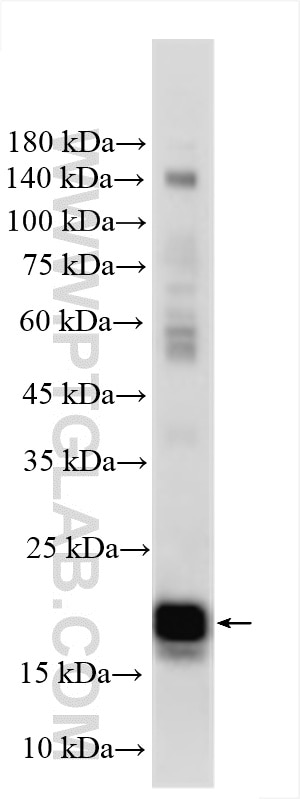
| Positive WB detected in | A549 cells |
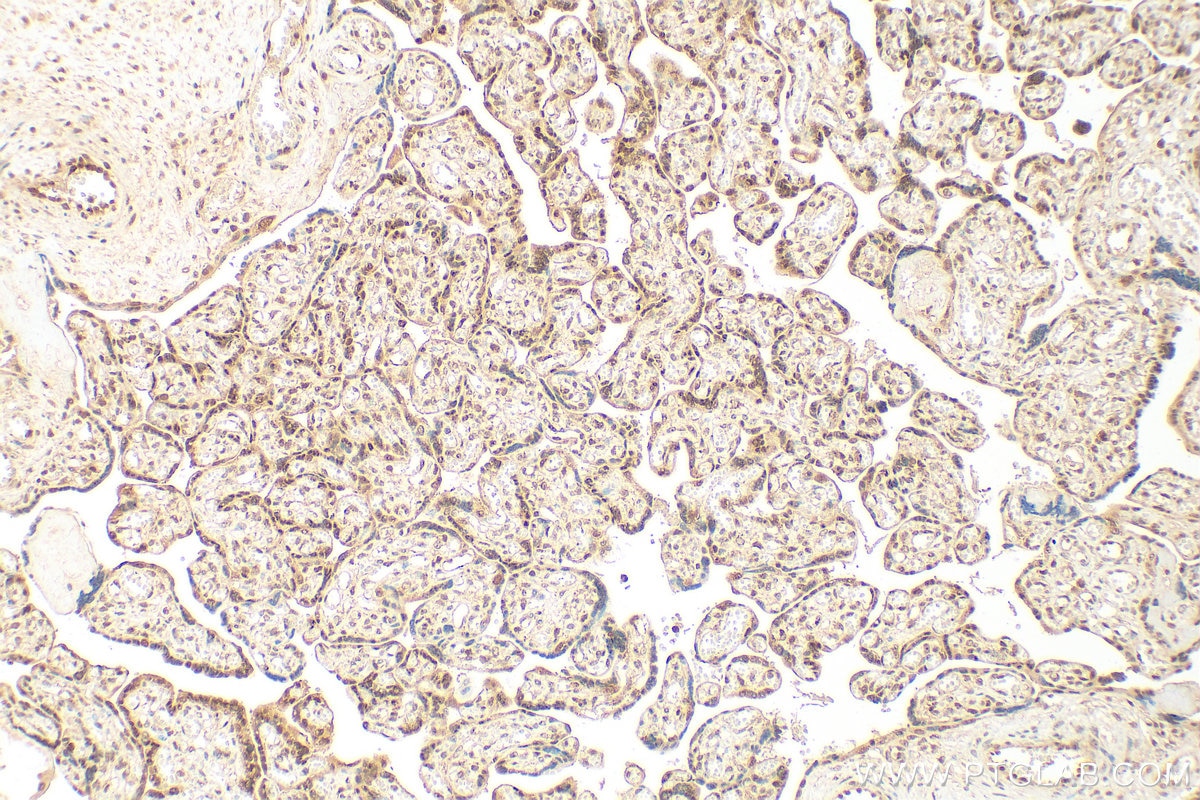
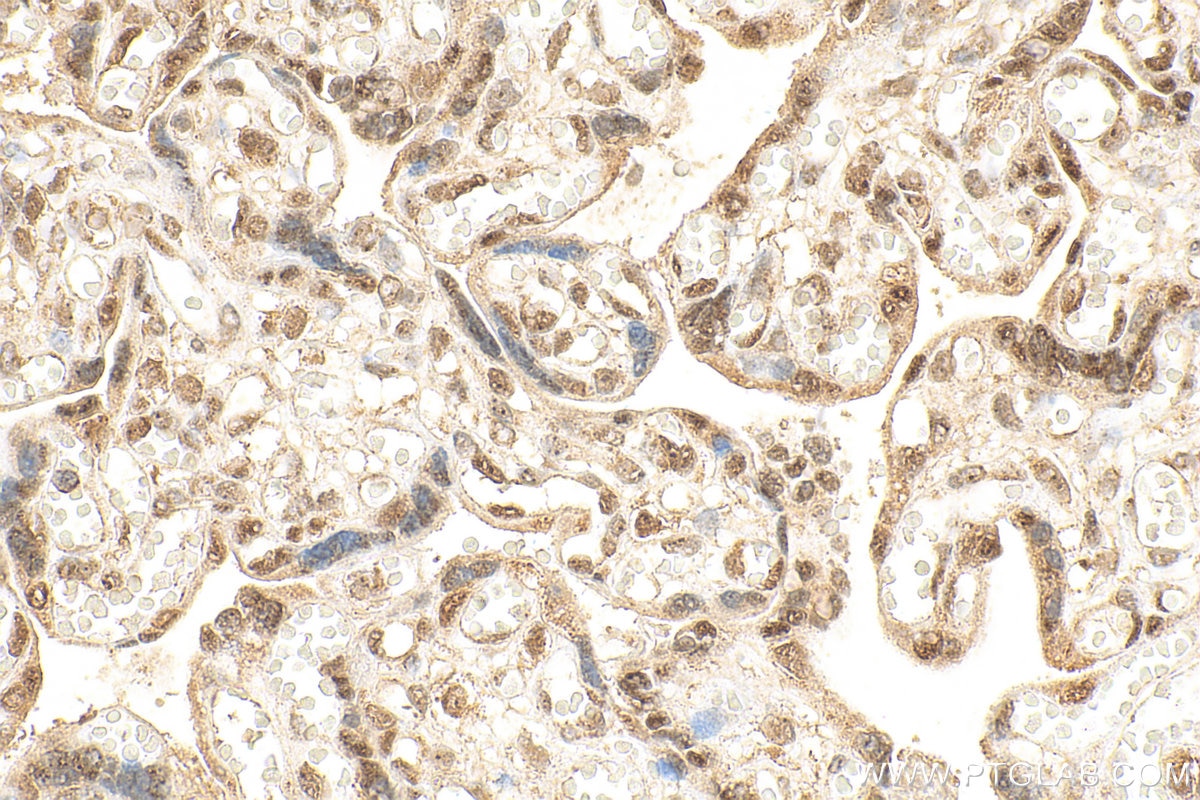
| Positive IHC detected in | human placenta tissue Note: suggested antigen retrieval with TE buffer pH 9.0; (*) Alternatively, antigen retrieval may be performed with citrate buffer pH 6.0 |
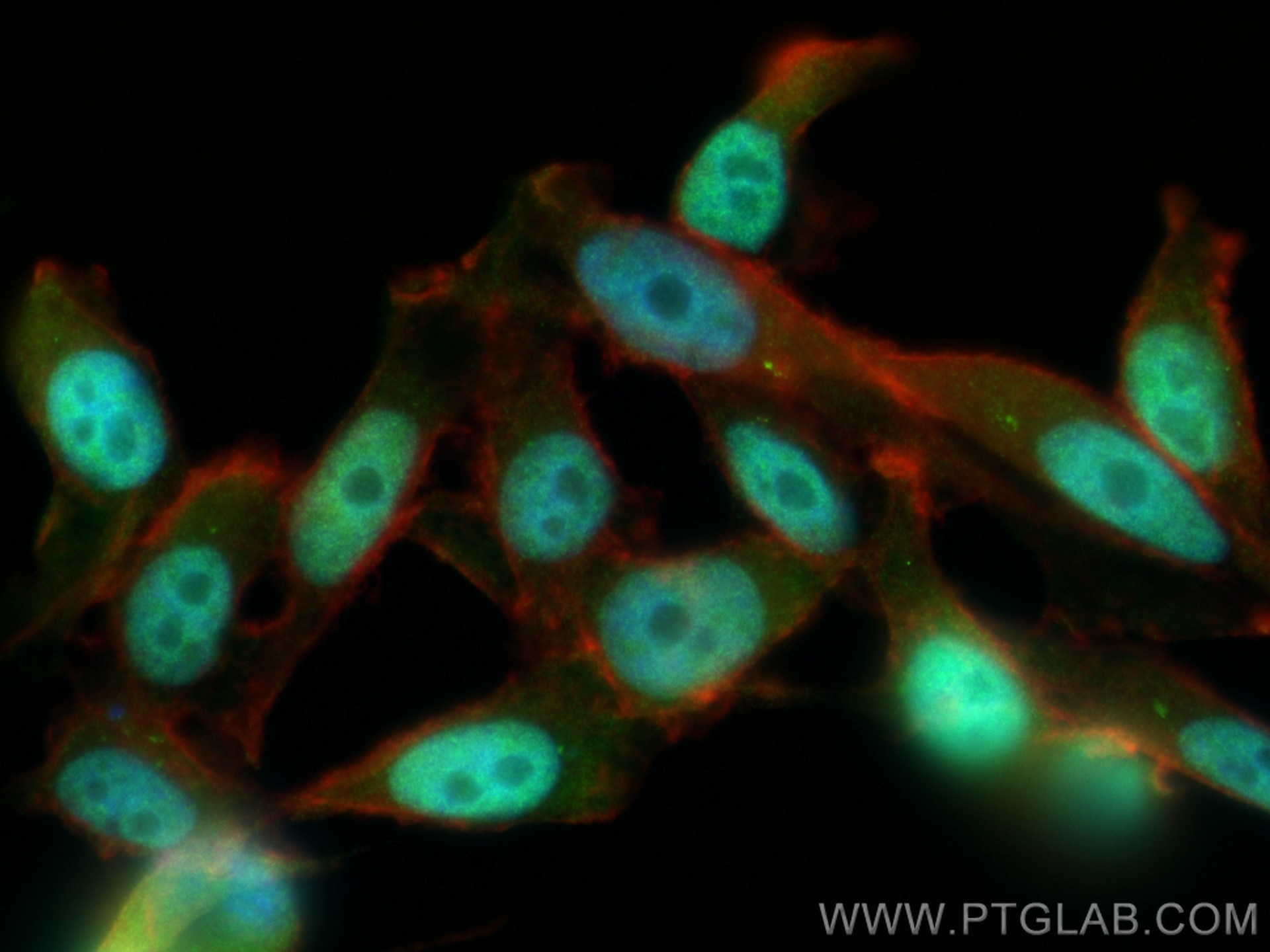
| Positive IF/ICC detected in | PC-3 cells |
Recommended dilution
| Application | Dilution |
|---|---|
| Western Blot (WB) | WB : 1:500-1:1000 |
| Immunohistochemistry (IHC) | IHC : 1:200-1:800 |
| Immunofluorescence (IF)/ICC | IF/ICC : 1:300-1:1200 |
| It is recommended that this reagent should be titrated in each testing system to obtain optimal results. | |
| Sample-dependent, Check data in validation data gallery. | |
Published Applications
| KD/KO | See 3 publications below |
| WB | See 25 publications below |
| IHC | See 1 publications below |
| IF | See 7 publications below |
Product Information
18475-1-AP targets ID1 in WB, IHC, IF/ICC, ELISA applications and shows reactivity with human, mouse, rat samples.
| Tested Reactivity | human, mouse, rat |
| Cited Reactivity | human, mouse, rat, rabbit |
| Host / Isotype | Rabbit / IgG |
| Class | Polyclonal |
| Type | Antibody |
| Immunogen |
CatNo: Ag13359 Product name: Recombinant human ID1 protein Source: e coli.-derived, PGEX-4T Tag: GST Domain: 1-155 aa of BC000613 Sequence: MKVASGSTATAAAGPSCALKAGKTASGAGEVVRCLSEQSVAISRCAGGAGARLPALLDEQQVNVLLYDMNGCYSRLKELVPTLPQNRKVSKVEILQHVIDYIRDLQLELNSESEVGTPGGRGLPVRAPLSTLNGEISALTAEAACVPADDRILCR 相同性解析による交差性が予測される生物種 |
| Full Name | inhibitor of DNA binding 1, dominant negative helix-loop-helix protein |
| Calculated molecular weight | 16 kDa |
| Observed molecular weight | 20 kDa |
| GenBank accession number | BC000613 |
| Gene Symbol | ID1 |
| Gene ID (NCBI) | 3397 |
| RRID | AB_2248812 |
| Conjugate | Unconjugated |
| Form | |
| Form | Liquid |
| Purification Method | Antigen affinity purification |
| UNIPROT ID | P41134 |
| Storage Buffer | PBS with 0.02% sodium azide and 50% glycerol{{ptg:BufferTemp}}7.3 |
| Storage Conditions | Store at -20°C. Stable for one year after shipment. Aliquoting is unnecessary for -20oC storage. |
Background Information
ID (inhibitor of DNA binding) proteins contain a helix-loop-helix (HLH) motif and regulate tissue-specific transcription within several cell lineages. They do not bind DNA directly, but inhibit lineage commitment by binding basic helix-loop-helix (bHLH) transcription factors through their HLH motif. ID1 proteins lack a basic DNA-binding domain but are able to form heterodimers with other HLH proteins, thereby inhibiting DNA binding. ID proteins contribute to cell growth, senescence, differentiation, and angiogenesis. Inhibitor of differentiation or DNA binding-1 (ID1) interacts with the transactivation domain of p65 (p65TAD) both in vitro and in vivo. The molecular weight of ID1 is about 20 kDa.
Protocols
| Product Specific Protocols | |
|---|---|
| IF protocol for ID1 antibody 18475-1-AP | Download protocol |
| IHC protocol for ID1 antibody 18475-1-AP | Download protocol |
| WB protocol for ID1 antibody 18475-1-AP | Download protocol |
| Standard Protocols | |
|---|---|
| Click here to view our Standard Protocols |
Publications
| Species | Application | Title |
|---|---|---|
Nat Commun ID1 expressing macrophages support cancer cell stemness and limit CD8+ T cell infiltration in colorectal cancer | ||
Nat Commun Glycocholic acid inhibits TRIB3-ID1 axis to acelerate colitis progression via suppressing intestinal stem cell renewal. | ||
Adv Sci (Weinh) ZDHHC2-Dependent Palmitoylation Dictates Ferroptosis and Castration Sensitivity in Prostate Cancer via Controlling ACSL4 Degradation and Lipid Peroxidation | ||
Cell Death Dis The ALDH2/PolG2 axis enhances mitochondrial biogenesis via transcriptional regulation of Nrf2 and promotes chemotherapy resistance in acute myeloid leukaemia. | ||
Environ Health Perspect Exposure to ambient air fine particulate matter prevents VEGF-induced mobilization of endothelial progenitor cells from the bone marrow. | ||
Acta Pharmacol Sin Pantoprazole ameliorates liver fibrosis and suppresses hepatic stellate cell activation in bile duct ligation rats by promoting YAP degradation |