
Validation Data Gallery
Tested Applications
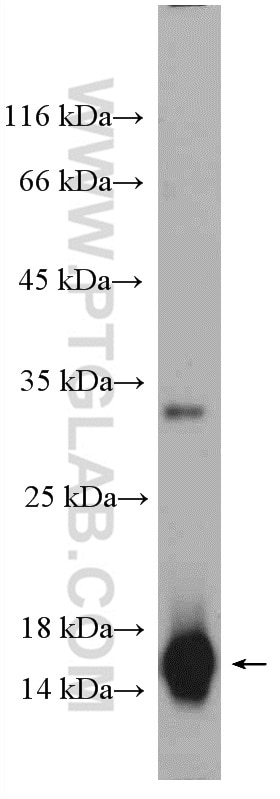
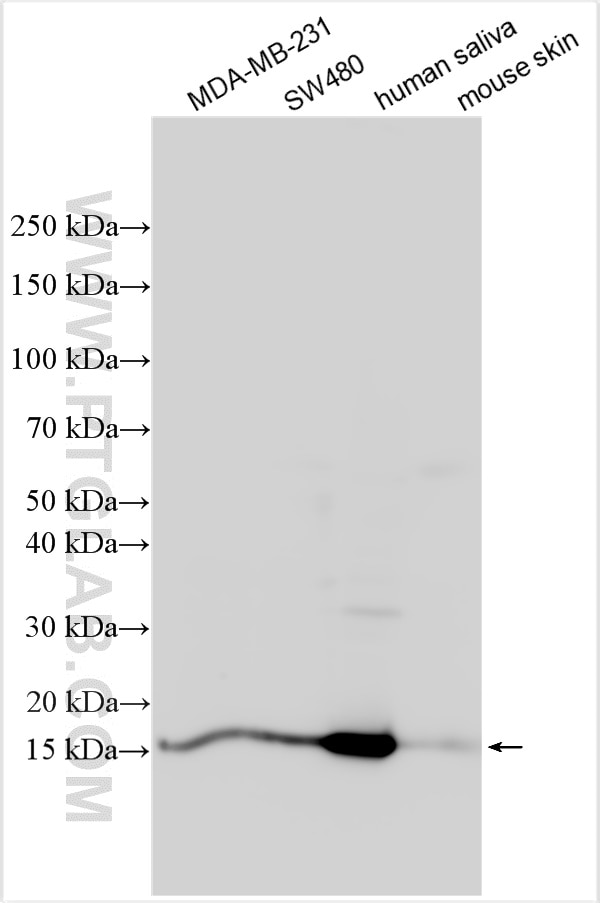
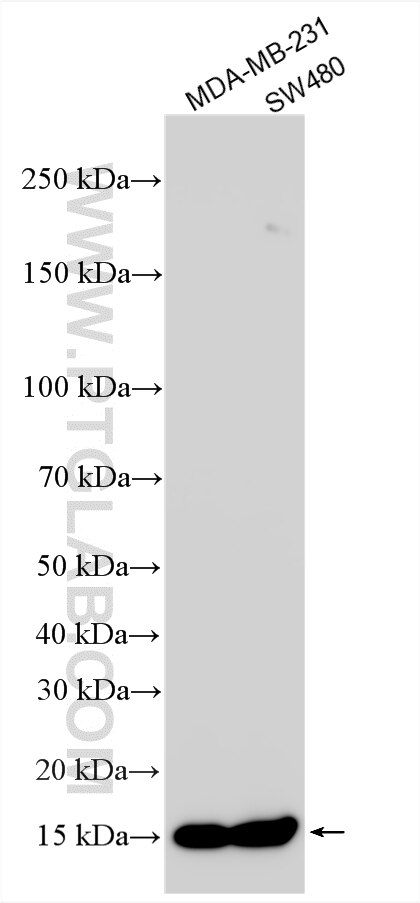
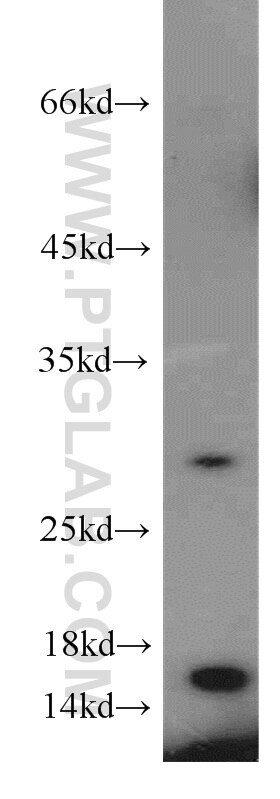
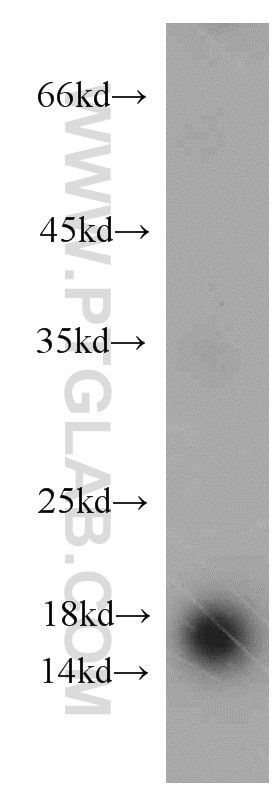
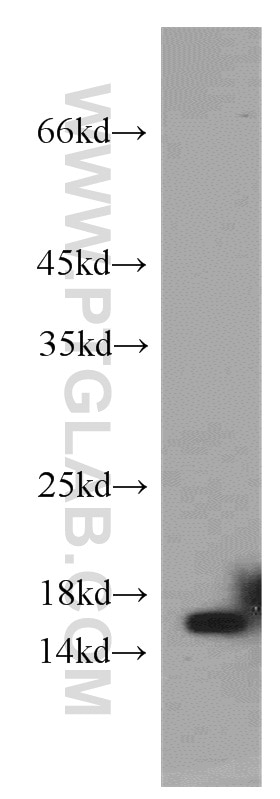
| Positive WB detected in | MDA-MB-231 cells, COLO 320 cells, human adrenal gland tissue, human saliva, human testis tissue, SW480 cells, mouse skin tissue |
Recommended dilution
| Application | Dilution |
|---|---|
| Western Blot (WB) | WB : 1:1000-1:8000 |
| It is recommended that this reagent should be titrated in each testing system to obtain optimal results. | |
| Sample-dependent, Check data in validation data gallery. | |
Published Applications
Product Information
16025-1-AP targets Cystatin SN/CST1 in WB, IHC, IF, IP, CoIP, ChIP, ELISA applications and shows reactivity with human, mouse samples.
| Tested Reactivity | human, mouse |
| Cited Reactivity | human, rat |
| Host / Isotype | Rabbit / IgG |
| Class | Polyclonal |
| Type | Antibody |
| Immunogen |
CatNo: Ag8862 Product name: Recombinant human CST1 protein Source: e coli.-derived, PGEX-4T Tag: GST Domain: 24-141 aa of BC021225 Sequence: KEEDRIIPGGIYNADLNDEWVQRALHFAISEYNKATKDDYYRRPLRVLRARQQTVGGVNYFFDVEVGRTICTKSQPNLDTCAFHEQPELQKKQLCSFEIYEVPWENRRSLVKSRCQES 相同性解析による交差性が予測される生物種 |
| Full Name | cystatin SN |
| Calculated molecular weight | 141 aa, 16 kDa |
| Observed molecular weight | 14-16 kDa |
| GenBank accession number | BC021225 |
| Gene Symbol | CST1 |
| Gene ID (NCBI) | 1469 |
| RRID | AB_10916385 |
| Conjugate | Unconjugated |
| Form | |
| Form | Liquid |
| Purification Method | Antigen affinity purification |
| UNIPROT ID | P01037 |
| Storage Buffer | PBS with 0.02% sodium azide and 50% glycerol{{ptg:BufferTemp}}7.3 |
| Storage Conditions | Store at -20°C. Stable for one year after shipment. Aliquoting is unnecessary for -20oC storage. |
Background Information
CST1, or cystatin SN, is a gene in humans that encodes a secreted protein belonging to the type 2 cystatin superfamily, which includes CST1, CST2, CST3, CST4, and CST5. These proteins are cysteine proteinase inhibitors found in various human fluids and secretions, where they appear to provide protective functions. CST1 is specifically found in saliva, tears, urine, and seminal fluid, and it plays a role in inhibiting the activity of cysteine proteases. CST1 has been implicated in various pathological processes, including tumor invasion and metastasis. Overexpression of CST1 has been observed in several types of cancer, such as lung, breast, colorectal, and gastric cancer, suggesting its role in the proliferation, invasion, and metastasis of these tumors.
Protocols
| Product Specific Protocols | |
|---|---|
| WB protocol for Cystatin SN/CST1 antibody 16025-1-AP | Download protocol |
| Standard Protocols | |
|---|---|
| Click here to view our Standard Protocols |
Publications
| Species | Application | Title |
|---|---|---|
Cell Res Differential secretome analysis reveals CST6 as a suppressor of breast cancer bone metastasis. | ||
Nat Commun Integrated single-cell transcriptome analysis reveals heterogeneity of esophageal squamous cell carcinoma microenvironment. | ||
Cell Rep Med Personalized drug screening in patient-derived organoids of biliary tract cancer and its clinical application | ||
Oncogene CST1 inhibits ferroptosis and promotes gastric cancer metastasis by regulating GPX4 protein stability via OTUB1
| ||
Int J Biol Macromol UBE2D2 promotes gastric cancer progression by inhibiting ferroptosis through autophagy-dependent stabilization of CST1 | ||
Aging (Albany NY) Transcriptional dysregulation of TRIM29 promotes colorectal cancer carcinogenesis via pyruvate kinase-mediated glucose metabolism. |